Exterior cleaning can make a home look brighter, safer, and better maintained. But when the wrong method is used, the same cleaning process that should improve a property can cause surface damage, streaking, water intrusion, or premature wear.
The right way to clean exterior surfaces starts with understanding the material, choosing the proper pressure level, using the right cleaning solution, and applying the safest technique for the surface. At Around The Bend Pressure Washing, we help homeowners and businesses in Tallahassee clean outdoor areas carefully while protecting the property from unnecessary damage.
Why Exterior Surfaces Need Different Cleaning Methods
Not every outdoor surface can handle the same amount of water pressure. Concrete, brick, vinyl siding, wood, painted surfaces, pool decks, and pavers all react differently to pressure, moisture, and cleaning solutions. A method that works well on a driveway may be too aggressive for siding or painted trim.
This is why professional exterior cleaning is not just about spraying water. It is about knowing how each surface responds and adjusting the method before cleaning begins.
Start by Identifying the Surface Material
Before cleaning, the first step is to identify what type of surface you are working with. This helps determine whether pressure washing, soft washing, surface cleaning, or a lower-pressure rinse is the safest option.
- Concrete driveways and sidewalks can usually handle more pressure than delicate surfaces.
- Vinyl siding, painted areas, and stucco often need a softer washing method.
- Brick, pavers, and stone require careful cleaning to protect joints, edges, and sealants.
- Wood, older surfaces, and damaged materials need extra caution to prevent splintering or peeling.
Use the Right Amount of Pressure
One of the most common causes of exterior cleaning damage is using too much pressure. High pressure can etch concrete, strip paint, loosen siding, damage mortar, and leave permanent marks on softer materials.
The safest approach is to use only the amount of pressure needed to clean the surface effectively. For many exterior areas, cleaning solution and technique matter more than force. Professional equipment allows the pressure to be adjusted based on the surface instead of using one setting for every area.
Choose Pressure Washing or Soft Washing Based on the Surface
Not every exterior surface should be cleaned using the same method. While pressure washing and soft washing are both effective cleaning techniques, each serves a different purpose and is designed for specific types of materials. Choosing the appropriate method is essential for achieving excellent cleaning results while minimizing the risk of unnecessary damage. The best approach depends on the surface material, its condition, the type of contamination present, and the amount of cleaning required.
Pressure washing uses higher water pressure to remove dirt, grime, mud, and surface buildup from durable materials that can withstand greater force. It is commonly used on concrete driveways, sidewalks, parking areas, retaining walls, certain patios, and other hard surfaces where embedded dirt and stains require more aggressive cleaning. When performed correctly, pressure washing restores these surfaces efficiently while improving their appearance and helping prevent long-term buildup.
Soft washing, on the other hand, relies on specialized cleaning solutions combined with low-pressure water rather than high force. Instead of blasting contaminants away, the cleaning solution breaks down algae, mold, mildew, bacteria, and organic growth before the surface is gently rinsed clean. This approach significantly reduces the risk of damaging delicate materials while still providing a thorough and long-lasting clean.
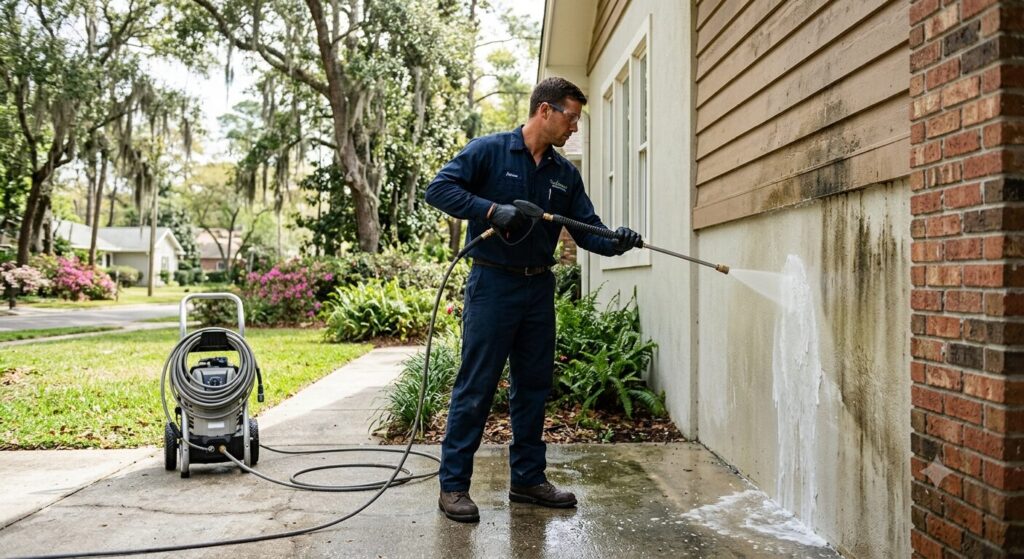
House siding is one of the best examples of a surface that typically benefits from soft washing. Vinyl, painted wood, stucco, and fiber cement siding can often be cleaned effectively without exposing them to unnecessary pressure that could force water behind the panels or damage the finish. Roofs, painted surfaces, fences, and other delicate exterior materials are also commonly cleaned using soft washing techniques to preserve their condition while eliminating stains and biological growth.
Professional pressure washing technicians carefully inspect every surface before deciding which cleaning method to use. They consider the material, its age, current condition, and the type of buildup that needs to be removed before selecting the safest and most effective approach. In many cases, a single property may require both pressure washing and soft washing for different areas.
Choosing the correct cleaning method is about protecting your investment while delivering outstanding results. By matching the right technique to each surface, professionals can safely remove dirt, algae, mildew, and stains while preserving the appearance, durability, and lifespan of your home’s exterior.
Apply the Correct Cleaning Solution
Water pressure alone is not always enough to remove stubborn exterior stains and buildup. While pressure washing is highly effective for rinsing away loose dirt and debris, contaminants such as algae, mold, mildew, grease, oil, rust stains, tannin stains, and other forms of organic growth often require specialized cleaning solutions to be removed completely. Selecting the right product is an important part of the cleaning process because different stains respond best to different treatments, and not every surface can safely handle the same type of cleaner.
Using the wrong cleaning solution can lead to a variety of problems. Some products may discolor concrete, brick, wood, or painted surfaces, while others may damage protective sealants or leave behind residue that attracts dirt more quickly. Applying a solution that is too strong can also affect nearby plants, grass, and landscaping, especially if surrounding areas are not properly protected or rinsed. On the other hand, using a cleaner that is too weak may fail to remove the buildup, resulting in disappointing or short-lived results.
Proper application is just as important as selecting the correct product. Cleaning solutions need to be mixed at the appropriate dilution, applied evenly, and allowed to remain on the surface for the correct amount of time to effectively loosen contaminants. Rinsing too soon may reduce the cleaner’s effectiveness, while leaving it on for too long can increase the risk of surface discoloration or damage. Achieving the right balance requires experience and an understanding of how different materials react to various cleaning products.
Professional pressure washing technicians evaluate several factors before choosing a cleaning solution, including the surface material, its age and condition, the type of stain or organic growth, nearby landscaping, drainage patterns, and surrounding features that require protection. This careful assessment allows them to use products that clean effectively while minimizing the risk of damage to the property or the environment.
By combining the appropriate cleaning solutions with proper pressure settings and proven techniques, professionals can safely remove stubborn buildup while preserving the appearance and integrity of exterior surfaces. Rather than relying on guesswork or one-size-fits-all products, professional pressure washing delivers longer-lasting, more consistent results that improve your property’s curb appeal while helping protect your investment for years to come.
Protect Surrounding Areas Before Cleaning
Successful pressure washing involves more than cleaning the surface itself—it also requires protecting everything around it. Before any cleaning begins, it is important to consider nearby landscaping, outdoor furniture, windows, doors, electrical outlets, light fixtures, decorative features, painted trim, and other exterior elements that could be affected by water, cleaning solutions, or debris. Taking the time to prepare the surrounding area helps reduce the risk of accidental damage and contributes to a safer, more efficient cleaning process.
Plants and landscaping are among the most important areas to protect. While professional cleaning solutions are selected carefully, flowers, shrubs, grass, and garden beds should still be safeguarded throughout the project. Pre-rinsing vegetation, covering delicate plants when appropriate, and rinsing the surrounding area after cleaning can help minimize the impact of cleaning products and prevent unnecessary stress on the landscape.
Outdoor furniture, grills, decorative items, and other movable objects should also be relocated whenever possible. Clearing the work area gives technicians better access to the surfaces being cleaned while reducing the chance of items being splashed, stained, or damaged during the process. It also eliminates obstacles that could create safety hazards or interfere with consistent cleaning.
Electrical components deserve special attention as well. Exterior outlets, light fixtures, doorbells, security cameras, and other electrical installations should be inspected before cleaning begins. Professionals know how to work safely around these features, using appropriate techniques to reduce the risk of water intrusion while still achieving a thorough clean.
A careful inspection may also identify loose siding, damaged trim, cracked windows, deteriorating caulking, or other vulnerable areas that require extra caution. Addressing these concerns before pressure washing begins helps prevent existing problems from becoming worse and allows technicians to adjust their cleaning methods accordingly.
Professional pressure washing companies understand that preparation is just as important as the cleaning itself. By taking simple but essential steps—such as moving obstacles, protecting sensitive areas, checking for existing damage, and safeguarding nearby landscaping—they help ensure the job is completed safely and efficiently.
Protecting the surrounding areas not only preserves your property’s appearance but also reduces the likelihood of avoidable damage. A well-prepared worksite allows professionals to focus on delivering thorough, consistent cleaning results while treating every part of your property with the care and attention it deserves.
Avoid Holding the Nozzle Too Close
Using the right pressure washer is only part of the equation—proper technique is just as important. One of the most common mistakes made during DIY pressure washing is holding the spray nozzle too close to the surface. While it may seem like getting closer will remove dirt faster, it can actually cause permanent damage in just a few seconds. Excessive pressure concentrated in a small area can leave visible lines, gouges, etching, or uneven cleaning marks that are difficult, and sometimes impossible, to correct.
Different materials react differently to high-pressure water. Concrete may develop noticeable striping or etched patterns, while wood can splinter or become rough. Painted surfaces may begin to peel, vinyl siding can crack or loosen, and softer materials such as composite decking or decorative trim can be damaged much more quickly than expected. Even durable surfaces can end up with patchy cleaning results if the nozzle is held too close or moved inconsistently across the area.
Maintaining the proper distance between the nozzle and the surface allows the water pressure to clean effectively without concentrating excessive force in one spot. Smooth, controlled movements and consistent overlap are also essential for achieving a uniform appearance. Rushing through the job, pausing too long in one area, or changing the angle frequently can all result in streaks, blotches, and uneven finishes.
Professional pressure washing technicians are trained to use the correct distance, nozzle type, spray angle, and pressure setting for each surface they clean. They continuously adjust their technique based on the material, level of dirt or staining, and overall condition of the property. This attention to detail allows them to remove contaminants efficiently while minimizing the risk of accidental damage.
Commercial-grade equipment also provides professionals with greater control over water pressure and spray patterns, making it easier to produce consistent, high-quality results. Combined with experience and proper technique, this helps restore exterior surfaces without leaving behind the marks or damage that are often associated with improper DIY cleaning.
A successful pressure washing job is about more than simply removing dirt. By maintaining the proper nozzle distance and using careful, consistent techniques, professionals deliver cleaner, more even results while protecting the surfaces that make up your home or commercial property.
Watch for Existing Damage Before Cleaning
Before any pressure washing project begins, it is important to inspect the property for signs of existing damage. While pressure washing is an effective way to restore the appearance of exterior surfaces, it should never be used without first evaluating the condition of the materials being cleaned. Small problems that already exist—such as cracks, loose paint, deteriorating mortar, soft wood, or worn sealant—can become worse if they are not identified and handled appropriately before cleaning starts.
Water under pressure can enter small openings and expand existing damage. For example, cracked concrete may allow water to penetrate deeper into the surface, while missing or damaged caulking around windows and doors can permit moisture to reach areas where it may contribute to mold, mildew, or structural deterioration. Loose siding, aging brick, weakened mortar joints, and weathered wood also require extra care because they may not withstand aggressive cleaning methods.
A thorough inspection helps identify potential concerns before equipment is even turned on. Common warning signs include loose or warped siding, chipped or peeling paint, cracked concrete, uneven pavers, missing joint sand, damaged caulking, crumbling brick, loose roof shingles, exposed wood fibers, and deteriorating sealants around windows and exterior fixtures. Recognizing these issues early allows the cleaning process to be adjusted to better protect the property.
Professional pressure washing technicians are trained to evaluate these conditions before beginning any project. Based on the type of material, its age, overall condition, and the extent of the buildup, they determine the safest cleaning method, appropriate pressure level, and suitable cleaning solutions. In some cases, they may recommend repairing certain damaged areas before cleaning to reduce the risk of further deterioration.
Taking the time to inspect a property first not only helps prevent accidental damage but also improves the overall quality of the cleaning results. By addressing vulnerable areas with extra care, professionals can safely remove dirt, algae, mold, mildew, and other contaminants while preserving the integrity of the surface.
A proper inspection is an essential part of professional pressure washing. It helps protect your investment, reduces the likelihood of costly repairs, and ensures every surface is cleaned using the safest and most effective approach possible.
Common Exterior Cleaning Mistakes to Avoid
- Using the same pressure setting on every surface
- Pressure washing siding instead of soft washing it
- Cleaning too close to windows, door seals, or vents
- Using harsh chemicals without proper dilution or rinsing
- Cleaning sealed pavers too aggressively
- Ignoring cracks, loose materials, or existing damage
- Trying to remove every stain with pressure alone
Best Cleaning Methods by Surface Type
| Surface Type | Recommended Method | Why It Helps Prevent Damage |
| Concrete driveways | Pressure washing or surface cleaning | Removes buildup while creating an even finish when done correctly |
| Sidewalks | Pressure washing or surface cleaning | Helps remove dirt, algae, and slippery buildup |
| Vinyl siding | Soft washing | Cleans without forcing water behind panels |
| Brick surfaces | Controlled pressure or soft washing | Protects mortar and surface texture |
| Pavers | Careful washing with proper rinsing | Helps protect joint sand and sealant |
| Pool decks | Low to moderate pressure | Reduces slippery buildup without damaging textured areas |
| Wood surfaces | Low pressure or specialized cleaning | Helps prevent splintering, gouging, or raised grain |
Why Professional Cleaning Helps Reduce Risk
Professional exterior cleaning helps reduce the risk of unnecessary damage by matching the cleaning method to each exterior surface instead of using a one-size-fits-all approach. Every exterior material has unique characteristics, and what works well for one area may not be appropriate for another. Before any exterior cleaning begins, professionals evaluate the surface material, its age, current condition, the type of dirt or organic buildup present, and the surrounding exterior features that need protection. This careful assessment helps determine the safest and most effective cleaning technique while preserving the integrity of the property.
At Around The Bend Pressure Washing, every exterior cleaning project is approached with attention to detail and a focus on long-term results. Our experienced team uses proven methods for exterior house washing, driveway and sidewalk cleaning, patio and pool deck cleaning, paver cleaning and sealing, and commercial pressure washing throughout Tallahassee, FL. By selecting the right pressure levels, cleaning solutions, and equipment for each exterior surface, we help remove dirt, algae, mildew, and stains while minimizing the risk of damage. Whether you’re maintaining a residential or commercial exterior, our goal is to deliver safe, consistent, and professional results that improve curb appeal, protect your investment, and keep every exterior surface looking its best for years to come.
Final Thoughts
The right way to clean exterior surfaces is not always the strongest method. It is the safest method for the surface. By choosing the correct pressure, cleaning solution, technique, and preparation steps, you can improve curb appeal while protecting your property from damage.
If you are unsure how a surface should be cleaned, it is better to ask a professional before using high pressure. A careful approach can help extend the life of your exterior surfaces and keep your property looking clean longer.
Need Help Cleaning Your Exterior Surfaces in Tallahassee?
Around The Bend Pressure Washing provides licensed and insured exterior cleaning services for residential and commercial properties in Tallahassee, FL. From house washing and driveway cleaning to patios, pool decks, sidewalks, and pavers, we help clean your property safely and effectively.
Call Around The Bend Pressure Washing today at 850-888-2105 to schedule professional exterior cleaning service.