Pressure washing and soft washing are both effective exterior cleaning methods, but they are not the same. The best method depends on the surface, the type of buildup, and the level of care needed to avoid damage.
Some surfaces, like concrete driveways and sidewalks, can usually handle stronger pressure. Other areas, like vinyl siding, painted surfaces, and wood, often need a gentler method. Using too much pressure in the wrong place can create marks, loosen materials, or force water behind exterior surfaces.
Around The Bend Pressure Washing serves Tallahassee, FL with professional exterior cleaning for residential and commercial properties. This guide explains the difference between pressure washing and soft washing so property owners can better understand which surface needs which method.
What Is Pressure Washing?
Pressure washing uses high-pressure water to remove dirt, grime, stains, mildew, algae, and buildup from durable outdoor surfaces. It is commonly used on hard materials that can handle stronger water force, especially when the surface has heavy foot traffic, tire marks, or deep outdoor buildup.
What Is Soft Washing?
Soft washing uses lower water pressure combined with cleaning solutions to break down organic growth like algae, mildew, mold, and dirt. Instead of relying mainly on pressure, soft washing relies on the right solution, dwell time, and proper rinsing. This makes it a safer choice for more delicate exterior surfaces.
The Main Difference Between Pressure Washing and Soft Washing
The biggest difference is the amount of pressure used. Pressure washing focuses on stronger water force for durable surfaces. Soft washing focuses on a gentler cleaning process for surfaces that can be damaged by high pressure. Both methods can be effective, but the wrong method can cause unnecessary surface damage.
Quick Comparison Guide
| Cleaning Method | Best For | Main Purpose |
| Pressure Washing | Concrete driveways, sidewalks, walkways, some patios, commercial flatwork | Remove heavy dirt, stains, grime, algae, mildew, and buildup from durable hard surfaces. |
| Soft Washing | Vinyl siding, painted surfaces, delicate exteriors, some roofs, wood, and areas needing a gentler approach | Clean organic growth and surface buildup without using strong pressure that may damage the material. |
| Controlled Cleaning | Pavers, brick, stone, older concrete, pool decks, mixed-material patios | Adjust pressure, cleaning solution, and technique based on the condition of the surface. |
Concrete Driveways
Recommended method: Pressure washing or surface cleaning.
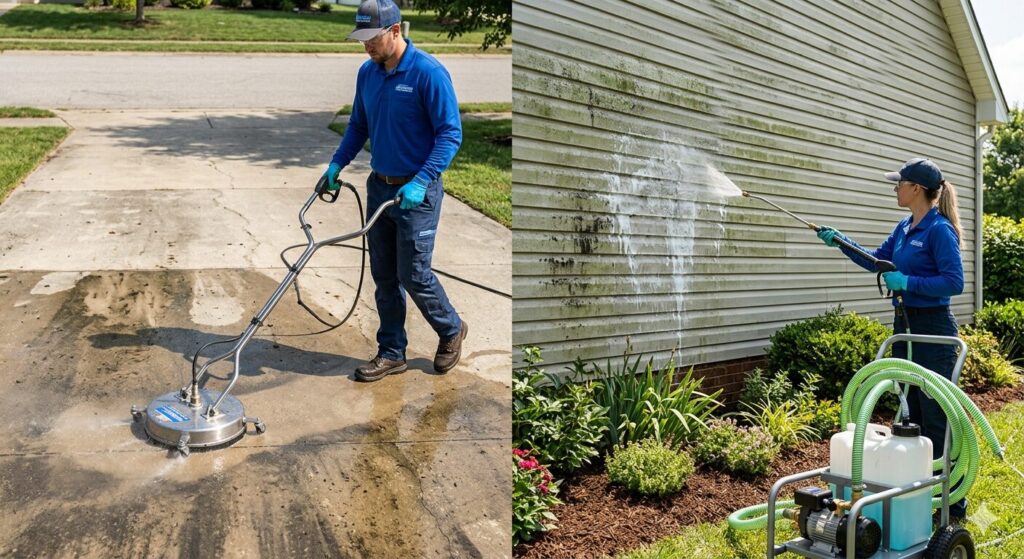
Concrete is usually strong enough for pressure washing, especially when removing tire marks, dirt, algae, mildew, and general staining. A professional surface cleaner can help create an even finish across the driveway instead of leaving streaks or cleaning lines.
Best for: Driveways with dark buildup, tire marks, mildew, algae, and uneven discoloration.
Sidewalks and Walkways
Recommended method: Pressure washing or surface cleaning.
Sidewalks and walkways collect dirt, foot traffic, leaves, moisture, and algae. Pressure washing can help improve appearance and reduce slippery buildup. The right cleaning pattern also matters because uneven cleaning can make sidewalks look patchy.
Best for: Walkways, entry paths, front sidewalks, commercial sidewalks, and high-traffic pedestrian areas.
Vinyl Siding
Recommended method: Soft washing.
Vinyl siding should not be blasted with strong pressure. High pressure can push water behind the siding, loosen panels, or leave marks. Soft washing is usually the better option because it removes mildew, algae, pollen, and dirt with lower pressure and proper cleaning solutions.
Best for: Homes with green algae, mildew streaks, dull siding, or dirt buildup on exterior walls.
Painted Surfaces
Recommended method: Soft washing or very controlled low-pressure cleaning.
Painted surfaces can peel, chip, or fade if cleaned too aggressively. A gentler method helps clean the surface without stripping paint or damaging the finish. The surface condition should be checked first, especially if the paint is older or already peeling.
Best for: Painted siding, trim, fences, exterior walls, and painted outdoor features.
Pavers
Recommended method: Controlled pressure cleaning with paver-safe care.
Pavers need careful cleaning because they often have joints, sand, and sometimes sealant. Too much pressure can disturb joint sand or affect the finish. Cleaning should remove weeds, dirt, algae, and stains while preparing the surface for possible sealing if needed.
Best for: Paver patios, paver driveways, walkways, and outdoor seating areas.
Brick and Stone
Recommended method: Controlled pressure cleaning.
Brick and stone can be durable, but older mortar, loose areas, or worn surfaces need extra care. The cleaning method should match the age and condition of the material. Strong pressure may not always be the safest choice for older or delicate masonry.
Best for: Brick walkways, stone patios, retaining walls, and exterior masonry surfaces.
Patios and Pool Decks
Recommended method: Low-to-moderate pressure cleaning depending on material.
Patios and pool decks can be made from concrete, pavers, stone, tile, or textured materials. Since these areas are often exposed to moisture, sunscreen, leaves, and foot traffic, cleaning should remove slippery buildup while protecting the surface texture.
Best for: Pool decks, backyard patios, outdoor lounge areas, and entertainment spaces.
Wood Decks and Fences
Recommended method: Gentle washing or soft washing.
Wood can splinter, fuzz, or scar when too much pressure is used. A gentle method helps remove dirt, mildew, and gray discoloration without cutting into the wood grain. The goal is to clean the wood while keeping the surface ready for proper maintenance or finishing.
Best for: Wood decks, fences, railings, and outdoor wooden surfaces.
Commercial Properties
Recommended method: A surface-specific cleaning plan.
Commercial properties often have different surfaces in one location, including sidewalks, entryways, storefronts, dumpster pads, parking areas, and exterior walls. Some areas may need pressure washing, while others may need soft washing or controlled cleaning.
Best for: Storefronts, office buildings, walkways, entry areas, commercial patios, and high-traffic exterior spaces.
How to Know Which Method Your Surface Needs
A good exterior cleaning plan starts with inspection. Before choosing pressure washing or soft washing, consider the surface material, age, condition, type of staining, and how delicate the area is.
- Use pressure washing for durable hard surfaces with heavy dirt, stains, and grime.
- Use soft washing for siding, painted areas, wood, and surfaces that could be damaged by high pressure.
- Use controlled cleaning for pavers, brick, stone, older surfaces, and mixed-material areas.
- Avoid using the same pressure level on every surface.
- Check for cracks, loose materials, peeling paint, old mortar, or damaged areas before cleaning.
Common Mistakes to Avoid
- Using high pressure on vinyl siding or painted surfaces.
- Using a narrow nozzle too close to the surface.
- Pressure washing wood too aggressively.
- Cleaning pavers without considering joint sand or sealant.
- Assuming every stain can be removed with pressure alone.
- Skipping professional help when the surface is old, delicate, or already damaged.
Why This Matters for Tallahassee Homes and Businesses
Tallahassee properties deal with humidity, rain, pollen, leaves, algae, mildew, and everyday outdoor buildup. These conditions can make exterior surfaces look dirty faster and may create slippery areas on driveways, sidewalks, patios, and pool decks. Choosing the right cleaning method helps improve curb appeal while protecting the condition of your property.
When to Call Around The Bend Pressure Washing
If you are not sure whether your surface needs pressure washing, soft washing, or a controlled cleaning method, Around The Bend Pressure Washing can help. We are a locally owned, licensed, and insured pressure washing company serving Tallahassee, FL. Our team provides professional exterior cleaning for residential and commercial properties with a focus on safety, precision, and customer satisfaction.
Our services include house washing, driveway and sidewalk cleaning, patio and pool deck cleaning, paver cleaning and sealing, and commercial pressure washing.
| Need help choosing between pressure washing and soft washing?Call Around The Bend Pressure Washing at 850-888-2105 for professional exterior cleaning in Tallahassee, FL. We can help clean the right surface with the right method for safer, better-looking results. |
Frequently Asked Questions
Is soft washing better than pressure washing?
Not always. Soft washing is better for delicate surfaces, while pressure washing is better for durable hard surfaces like concrete. The best method depends on the material and condition of the surface.
Can pressure washing damage my home?
Yes, if it is used incorrectly. High pressure can damage siding, paint, wood, older brick, or delicate materials. That is why the cleaning method should match the surface.
What surfaces usually need soft washing?
Vinyl siding, painted surfaces, wood, and delicate exterior areas often need soft washing or a lower-pressure method.
What surfaces usually need pressure washing?
Concrete driveways, sidewalks, walkways, and some commercial flatwork are common surfaces for pressure washing.
Do pavers need pressure washing or soft washing?
Pavers usually need a controlled approach. The method should remove dirt and buildup while protecting joint sand, sealant, and the surface finish.