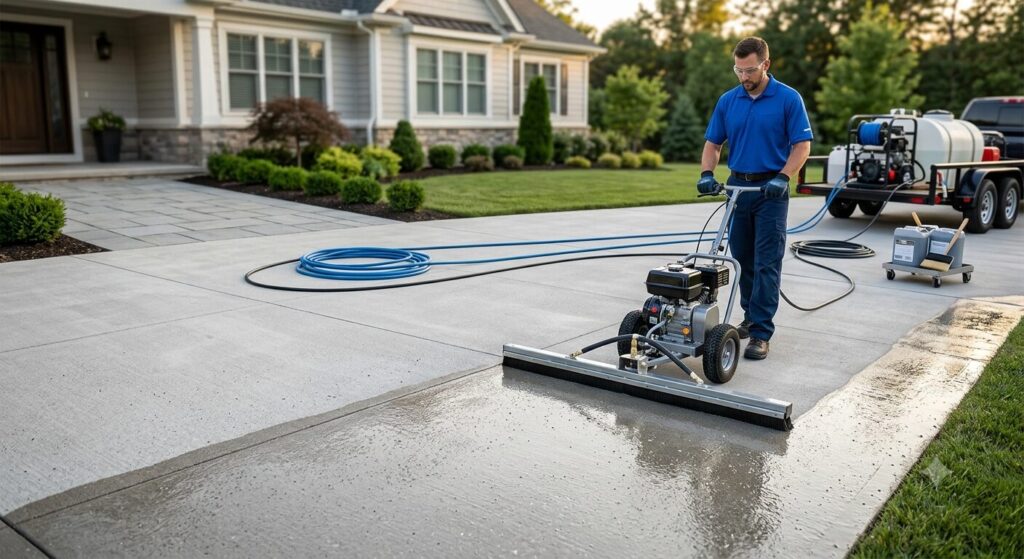
A freshly pressure washed driveway can instantly improve the look of your home. It removes dirt, algae, mildew, tire marks, and surface buildup that can make concrete look dark, stained, or neglected.
But after the cleaning is done, proper maintenance matters. They are exposed to vehicles, rain, humidity, leaves, soil, oil, and everyday outdoor traffic. Without simple care, buildup can return and stains can settle back into the surface.
Around The Bend Pressure Washing is a locally owned, licensed, and insured exterior cleaning company serving Tallahassee, FL. Our team helps homeowners keep driveways, sidewalks, patios, pool decks, pavers, and other exterior surfaces cleaner and better protected with safe, effective cleaning methods.
Why Driveway Maintenance Matters After Pressure Washing
Pressure washing removes visible buildup, but your driveway continues to face daily exposure after the service. Cars can leave tire marks, oil, grease, and fluids. Trees can drop leaves, pollen, sap, and organic debris. Rain and humidity can encourage algae and mildew growth, especially in shaded areas.
Maintaining it helps protect the clean result, keeps your property looking cared for, and reduces the chance of stains becoming harder to remove later.
Keep Leaves, Dirt, and Debris Off the Surface
One of the simplest ways to maintain a clean it is to keep loose debris from sitting on the surface. Leaves, pine needles, dirt, and grass clippings can hold moisture against the concrete and may contribute to staining or organic growth.
A quick sweep, blower pass, or rinse can help keep it looking cleaner between professional cleanings. This is especially helpful after yard work, storms, or heavy pollen seasons in Tallahassee.
Rinse Away Fresh Spills Quickly
If oil, grease, drinks, fertilizer, paint, or other liquids spill on the driveway, try to rinse or blot the area as soon as possible. The longer a spill sits, the more likely it is to soak into porous concrete and leave a visible stain.
For vehicle-related stains, avoid waiting until the stain becomes dark and set in. Fresh stains are usually easier to treat than older stains that have had time to bond with the surface.
Watch for Oil and Fluid Leaks From Vehicles
Cars, trucks, motorcycles, lawn equipment, and trailers can leave oil, transmission fluid, brake fluid, or rust stains on concrete. If a vehicle is leaking, parking in the same spot every day can create a deep stain over time.
Using a drip tray or absorbent mat can help reduce staining while the leak is being repaired. This small step can help protect the clean driveway surface after pressure washing.
Avoid Letting Grass Clippings Sit on Concrete
After mowing or edging, grass clippings can collect along the driveway edges. If they stay wet, they can leave green or brown stains and may encourage organic buildup.
Blowing grass clippings away from the driveway after lawn care helps keep the concrete cleaner and reduces moisture buildup near the surface edges.
Trim Back Overhanging Plants and Trees
Shade and moisture are two common reasons algae and mildew return to driveways. Overhanging trees, bushes, and plants can block sunlight, trap moisture, and drop leaves or sap onto the concrete.
Keeping plants trimmed back can help the driveway dry faster after rain or irrigation. This may reduce how quickly algae and mildew come back, especially in shaded sections.
Check Your Sprinklers and Drainage
Sprinklers that constantly spray the driveway can leave mineral marks, dirt trails, and wet areas that attract algae. Poor drainage can also cause water to sit on the concrete longer than it should.
After pressure washing, check whether irrigation water is hitting the driveway too often. Adjusting sprinkler heads or improving drainage can help extend the clean appearance of the surface.
Use the Right Cleaning Products for Spot Cleaning
For small stains, homeowners may be tempted to use strong cleaners, harsh chemicals, or abrasive tools. However, the wrong product can discolor concrete, damage sealers, or create uneven marks.
If you need to spot clean, use a product that is appropriate for concrete and test a small area first. For stubborn stains, it is safer to ask a professional before applying anything too strong.
Do Not Use Too Much Pressure for DIY Touch-Ups
A driveway may look strong, but using too much pressure in one spot can leave lines, etching, or uneven patterns. This often happens when a homeowner uses a rental pressure washer without the right tip, distance, or technique.
If the driveway only needs a light rinse, a garden hose may be enough for basic maintenance. For deeper buildup, professional cleaning can help avoid streaks and surface damage.
Consider Sealing the Driveway When Appropriate
Concrete sealing may help reduce water absorption, make some stains easier to clean, and provide an added layer of protection. However, not every driveway needs the same sealing product or schedule.
If your driveway has heavy traffic, frequent staining, or exposed concrete, ask a professional whether sealing is a good option. The surface should be cleaned and properly prepared before sealing.
Pay Attention to Shaded and Damp Areas
Some parts of the driveway may get dirty faster than others. Areas near trees, roof runoff, fences, or landscaping often stay damp longer and may develop algae or mildew sooner.
These spots may need more frequent rinsing, sweeping, or professional attention. Catching buildup early can help prevent dark stains from spreading across the driveway.
Create a Simple Driveway Maintenance Routine
A maintenance routine does not have to be complicated. A few minutes of regular care can help your driveway stay cleaner for longer. Sweep or blow debris weekly, rinse fresh spills quickly, check for vehicle leaks, and watch for algae in shaded areas.
For many Tallahassee homes, a seasonal or annual exterior cleaning schedule can help keep the driveway, sidewalks, patio, pool deck, and other surfaces looking better throughout the year.
When to Schedule Another Professional Cleaning
You may need another professional driveway cleaning when the concrete starts looking dark again, algae or mildew returns, tire marks become noticeable, or stains begin standing out from the rest of the surface.
How often you need cleaning depends on shade, traffic, weather, trees, drainage, and how much buildup your driveway collects. Around The Bend Pressure Washing can inspect the surface and recommend the right cleaning approach.
Choose Around The Bend Pressure Washing in Tallahassee, FL
Around The Bend Pressure Washing provides professional driveway and sidewalk cleaning, house washing, patio and pool deck cleaning, paver cleaning and sealing, and commercial pressure washing services in Tallahassee, FL.
Our licensed and insured team uses safe, effective cleaning methods to help restore curb appeal and protect your property. Whether your driveway needs a deep clean or you want to maintain your exterior surfaces after service, our team can help.
Simple Driveway Maintenance Checklist
| Maintenance Task | How Often | Why It Helps |
| Sweep or blow away leaves and dirt | Weekly or as needed | Prevents moisture, stains, and organic buildup |
| Rinse fresh spills quickly | Immediately | Reduces the chance of deep staining |
| Check for vehicle leaks | Regularly | Helps prevent oil and fluid stains |
| Remove grass clippings after mowing | After lawn care | Reduces green or brown staining near driveway edges |
| Trim nearby plants and trees | Seasonally | Helps shaded areas dry faster |
| Adjust sprinklers away from concrete | As needed | Prevents constant wet spots and mineral marks |
| Schedule professional cleaning | Seasonally or annually | Keeps buildup from becoming harder to remove |
Frequently Asked Questions
How long does a driveway stay clean after pressure washing?
It depends on weather, shade, vehicle traffic, trees, drainage, and daily use. Regular sweeping, rinsing spills, and reducing moisture can help the clean result last longer.
Should I seal my driveway after pressure washing?
Sealing may be helpful for some concrete driveways, especially if staining or water absorption is a concern. The driveway should be properly cleaned and prepared before sealing.
Can I pressure wash it myself between professional cleanings?
You can rinse or lightly clean small areas, but too much pressure can leave lines or damage the concrete. For deeper buildup, professional cleaning is the safer option.
How can I prevent algae from coming back?
Keep the surface clear of debris, reduce shade where possible, improve drainage, and avoid constant sprinkler overspray. Professional cleaning can also help remove buildup more effectively.
What causes black or dark stains on concrete driveways?
Dark stains can come from algae, mildew, tire marks, oil, dirt, leaves, and moisture. The right cleaning method depends on the type of stain and the condition of the concrete.
Need Help Maintaining Your Driveway?
If it is starting to look stained, dark, slippery, or dirty again, Around The Bend Pressure Washing can help. Call 850-888-2105 today to schedule professional driveway cleaning in Tallahassee, FL, and keep your exterior surfaces looking clean and well cared for.