Brick, pavers, and natural stone can make an outdoor space look beautiful, but they need the right cleaning method to stay protected. These surfaces can collect dirt, algae, mildew, weeds, moss, sand movement, and stains from daily outdoor exposure. In Tallahassee, humidity and rain can make buildup appear faster, especially in shaded patios, walkways, driveways, and pool deck areas.
The safest way to clean brick, pavers, and stone is to use a method that matches the surface, the condition of the material, and the type of buildup. Using too much pressure, the wrong nozzle, or harsh chemicals can damage the surface, loosen joint sand, leave streaks, or create uneven results.
Around The Bend Pressure Washing provides professional exterior cleaning in Tallahassee, FL, helping homeowners and commercial property owners clean outdoor surfaces safely while protecting curb appeal.
Why Brick, Pavers, and Stone Need Special Care
Brick, pavers, and stone are not the same as plain concrete. They may have joints, textures, sealants, natural pores, or softer areas that need a more careful approach. Some surfaces can handle controlled pressure, while others need lower pressure with the right cleaning solution.
The goal is not just to make the surface look clean. The goal is to clean it without causing surface damage, joint sand loss, chipped edges, or discoloration.
Start by Identifying the Surface Type
Before cleaning, it is important to know what type of surface you are working with. Brick may be older, softer, or more porous. Pavers may be sealed or unsealed. Natural stone may vary in hardness and texture depending on the material.
A cleaning method that works well on one surface may be too aggressive for another. This is why surface identification should come before pressure washing.
Safe Cleaning Method for Brick Surfaces
Brick surfaces should be cleaned carefully because older or softer brick can be damaged by high pressure. Mortar joints can also weaken if the wrong pressure or nozzle is used. For many brick surfaces, a lower-pressure approach with the correct cleaning solution is safer than blasting the surface with strong pressure.
Professional cleaning helps remove dirt, mildew, algae, and staining while protecting the brick and mortar as much as possible.
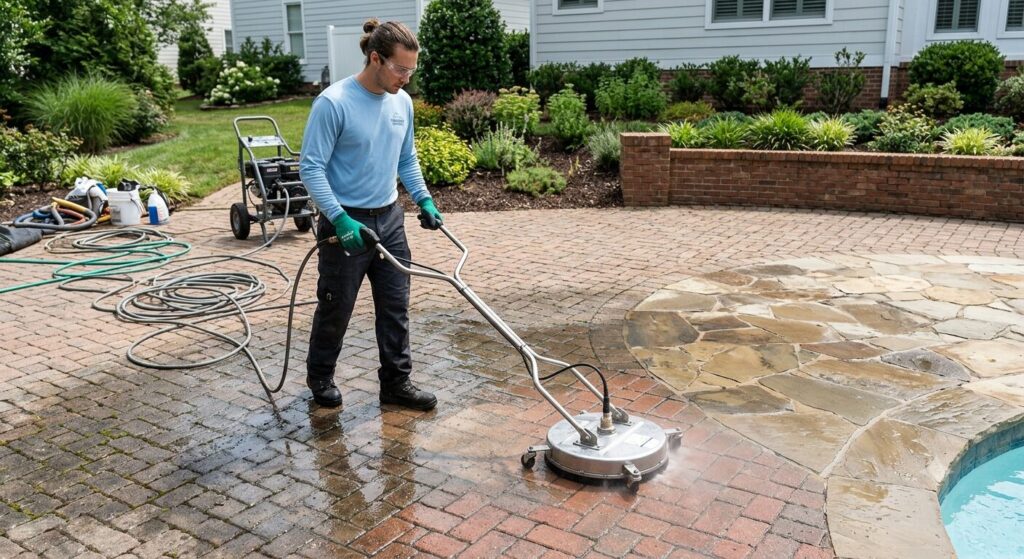
Safe Cleaning Method for Pavers
Pavers are commonly used for driveways, walkways, patios, and pool decks. They often have joint sand between each piece, which helps keep the pavers stable. High pressure used incorrectly can remove too much joint sand or create uneven cleaning marks.
The safest method is controlled cleaning with attention to the joints, edges, and any existing sealer. If pavers are heavily stained or faded, they may also benefit from cleaning and sealing to help protect the surface after washing.
Safe Cleaning Method for Natural Stone
Natural stone surfaces can be more sensitive than they appear. Some stone can handle pressure well, while other types may be more prone to etching, flaking, or discoloration. The safest method often depends on the stone type, age, finish, and location.
For natural stone, it is better to use a cautious cleaning approach instead of assuming high pressure is always the answer.
Why Too Much Pressure Can Cause Damage
Pressure washing can be effective, but too much pressure can damage brick, pavers, and stone. It can chip edges, loosen mortar, remove joint sand, scar the surface, or leave wand marks. These problems may not always be easy to fix after they happen.
A professional pressure washing company knows how to adjust pressure, choose the right nozzle, and use proper technique based on the surface condition.
When Cleaning Solutions Are Helpful
Some stains and buildup cannot be removed with water pressure alone. Algae, mildew, moss, and organic staining may need the right cleaning solution to loosen the material before rinsing.
The key is using a solution that fits the surface and nearby areas. A professional cleaner should also consider landscaping, drainage, and surrounding materials before applying any cleaning product.
Should Brick, Pavers, and Stone Be Sealed After Cleaning?
Some surfaces may benefit from sealing after cleaning, especially pavers and certain stone surfaces. Sealing can help protect against stains, moisture, fading, and future buildup. It can also help improve the appearance of the surface when done correctly.
Not every surface needs sealing, but it is worth considering if the area gets heavy foot traffic, vehicle traffic, shade, moisture, or frequent staining.
Common Mistakes Homeowners Should Avoid
One common mistake is using the strongest pressure setting because the surface looks tough. Another mistake is cleaning too close to the surface, using the wrong nozzle, or treating all outdoor surfaces the same way.
Homeowners should also avoid applying random cleaners without knowing whether they are safe for brick, pavers, stone, nearby plants, or sealed surfaces.
Why Professional Cleaning Is the Safer Choice
Professional cleaning reduces guesswork. Instead of relying on one method for every surface, a trained team can inspect the area, choose the right cleaning approach, and adjust the process based on the material.
For Tallahassee homeowners and businesses, this helps keep outdoor spaces cleaner while reducing the risk of damage from improper cleaning.
Choose Around The Bend Pressure Washing for Brick, Paver, and Stone Cleaning
Around The Bend Pressure Washing is a locally owned, licensed, and insured pressure washing company serving Tallahassee, FL. Our exterior cleaning services include house washing, driveway and sidewalk cleaning, patio and pool deck cleaning, paver cleaning and sealing, and commercial pressure washing.
If your brick, paver, or stone surfaces look dirty, stained, slippery, or worn down from outdoor buildup, our team can help clean them with a safe and effective approach.
Brick, Paver, and Stone Cleaning Guide
| Surface Type | Common Problem | Safer Cleaning Approach | What to Avoid |
| Brick | Mildew, dirt, and mortar staining | Lower pressure with the right cleaning solution | High pressure that can damage brick or mortar |
| Pavers | Algae, weeds, stains, and faded appearance | Controlled cleaning with attention to joint sand | Blasting joints or removing too much sand |
| Natural stone | Organic stains, moss, and discoloration | Cautious cleaning based on stone type and finish | Assuming all stone can handle strong pressure |
| Sealed surfaces | Dull finish or surface buildup | Inspect sealer condition before cleaning | Using harsh chemicals that may affect the sealer |
| Pool deck areas | Slippery algae and mildew buildup | Careful cleaning with proper rinsing | Leaving residue or using unsafe pressure near edges |
Frequently Asked Questions
Can brick surfaces be pressure washed?
Yes, many brick surfaces can be pressure washed, but the pressure should be controlled. Older or softer brick may need a gentler method to avoid damage.
Can pressure washing remove weeds between pavers?
Pressure washing may remove some weeds and buildup, but paver joints should be cleaned carefully so too much joint sand is not removed.
Is stone safe to pressure wash?
Some stone surfaces can be pressure washed, but the safest method depends on the type of stone, its condition, and whether it has a sealed or textured finish.
Should pavers be sealed after cleaning?
Pavers may benefit from sealing after cleaning, especially if the area gets heavy traffic, frequent stains, or moisture. Sealing can help protect and improve the surface appearance.
What is the safest way to clean outdoor masonry surfaces?
The safest method is to inspect the surface first, use controlled pressure, apply the right cleaning solution when needed, and avoid treating every surface the same way.
Need Help Cleaning Brick, Pavers, or Stone?
If your brick, pavers, stone surfaces, patio, walkway, driveway, or pool deck needs professional cleaning, Around The Bend Pressure Washing can help. Call 850-888-2105 today to schedule exterior cleaning in Tallahassee, FL, and restore your outdoor surfaces with a safer, more professional approach.