
How Often Should You Clean Your Driveway and Sidewalks?
Driveways and sidewalks are some of the most used exterior surfaces around your home. They handle foot traffic, vehicle traffic, rain, dirt, leaves, grass clippings, tire marks, and organic growth throughout the year. Because they are outside every day, they can start looking dull or stained long before many homeowners notice the buildup.
For many homes in Tallahassee, FL, driveways and sidewalks should usually be cleaned about once a year. However, the best schedule depends on shade, tree coverage, drainage, surface condition, traffic, and how quickly algae, mildew, and stains return. Some properties may need cleaning every 6 to 9 months, while others may stay cleaner for 12 to 18 months.
The goal is not only to make the surface look better. Regular cleaning helps reduce slippery buildup, protects curb appeal, and keeps dirt and organic growth from settling deeper into the concrete over time.
The General Rule: Clean Driveways and Sidewalks Once a Year
A good starting point for most homeowners is to schedule professional driveway and sidewalk cleaning once per year. Annual cleaning helps remove dirt, algae, mildew, tire marks, leaf stains, and general surface buildup before they become harder to clean.
This schedule works well for many residential properties because it keeps outdoor surfaces looking fresh without waiting until the concrete becomes heavily stained. It also helps maintain a cleaner appearance for the front of the home, especially since the driveway and sidewalk are often the first areas visitors and neighbors see.
For homes that receive plenty of sunlight and have good drainage, yearly cleaning may be enough. But for shaded areas or surfaces exposed to constant moisture, cleaning may need to happen more often.
When You May Need Cleaning Every 6 to 9 Months
Some driveways and sidewalks collect buildup faster than others. In Tallahassee, humidity, rain, trees, and shaded areas can cause algae and mildew to grow more quickly on concrete and other hard surfaces.
You may need cleaning every 6 to 9 months if your property has:
- Heavy shade from trees or nearby structures
- Frequent algae or green buildup on concrete
- Poor drainage or areas where water sits after rain
- Lots of leaves, pollen, or organic debris
- High foot traffic or vehicle traffic
- A driveway near landscaping, mulch, or soil runoff
- Sidewalks that become slippery after rain
If your driveway or sidewalk becomes slippery, dark, or stained quickly after cleaning, it may be a sign that annual cleaning is not frequent enough for your property.
When You Can Wait 12 to 18 Months
Some properties do not collect dirt or algae as quickly. If your driveway and sidewalks receive a lot of sunlight, have proper drainage, and are not surrounded by heavy tree coverage, you may be able to clean them every 12 to 18 months.
However, it is still important to check the surface regularly. Even if the concrete does not look extremely dirty, stains can slowly build up over time. A surface may also look clean from a distance but still have mildew, pollen, or dirt settled into small pores and texture.
The best approach is to inspect the surface every few months and schedule cleaning before stains become stubborn.
Signs Your Driveway or Sidewalk Needs Cleaning
Instead of relying only on a calendar, you can also look for visible signs that your driveway or sidewalk needs professional cleaning.
Common signs include:
- Dark patches or uneven discoloration
- Green algae, mildew, or black organic buildup
- Slippery areas after rain
- Tire marks or oil stains on the driveway
- Leaf stains or rust-colored marks
- Dirt buildup along edges and corners
- A dull or aged look compared to nearby surfaces
- Walkways that look dirty even after sweeping
If you notice these signs, it may be time to schedule driveway and sidewalk cleaning before the buildup becomes harder to remove.
Why Tallahassee Weather Affects Cleaning Frequency
Tallahassee weather can make outdoor surfaces dirty faster because of humidity, rainfall, warm temperatures, pollen, and organic debris. These conditions can encourage algae, mildew, and grime to settle on concrete surfaces, especially in shaded areas.
Driveways and sidewalks near trees may also collect leaves, sap, seed pods, and stains. When this debris sits on the surface, moisture can hold it in place and create darker patches. Over time, these stains can become more noticeable and more difficult to clean.
Because of this, homeowners in Tallahassee may need to clean outdoor concrete more often than homes in drier climates.
Driveway Cleaning vs. Sidewalk Cleaning
Driveways and sidewalks are both concrete surfaces, but they often collect different types of buildup.
Driveways usually deal with:
- Vehicle tire marks
- Oil spots and fluid stains
- Dirt from tires
- Rust stains from tools, furniture, or irrigation
- Heavy wear near parking areas
Sidewalks usually deal with:
- Foot traffic
- Algae or mildew from shade
- Grass clippings and soil runoff
- Leaf stains
- Slippery areas along edges
Because driveways and sidewalks experience different types of dirt, a professional cleaning method should be selected based on the condition of each surface. A reliable exterior cleaning company will look at the surface before choosing the right pressure, cleaning solution, and technique.
Is Pressure Washing the Best Method for Driveways and Sidewalks?
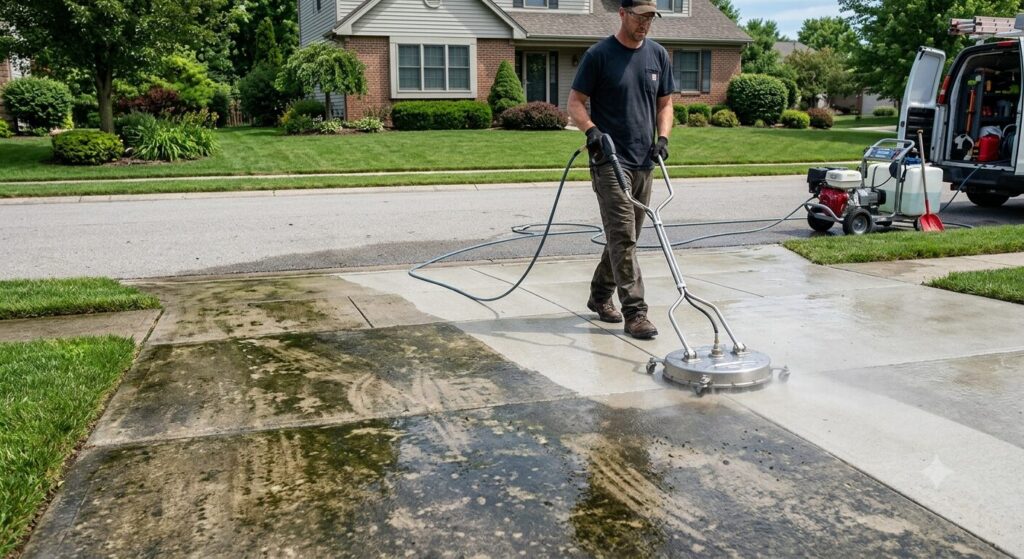
For many concrete driveways and sidewalks, pressure washing is an effective cleaning method because concrete can usually handle more cleaning power than softer surfaces. However, the pressure still needs to be controlled. Too much pressure, the wrong nozzle, or poor technique can leave streaks, marks, or surface damage.
Professional cleaners often use surface cleaners for larger concrete areas. A surface cleaner helps create a more even result compared to using only a pressure washing wand. This can help reduce lines and uneven cleaning marks on driveways and sidewalks.
For organic buildup like algae and mildew, cleaning solutions may also be used to help break down growth before or during washing. This helps improve the result and can make the surface cleaner than pressure alone.
Should You Clean Before or After the Rainy Season?
Many homeowners choose to clean driveways and sidewalks before heavy seasonal buildup becomes noticeable. Cleaning before or after rainy periods can both make sense depending on the condition of your property.
Cleaning before the rainy season can help remove existing algae, mildew, and dirt before moisture makes the surface more slippery. Cleaning after the rainy season can help remove buildup caused by months of moisture, leaves, and stains.
For Tallahassee homeowners, the best schedule is usually based on the surface condition rather than one fixed month. If the concrete looks dark, slippery, or stained, it is better to clean it sooner instead of waiting for the next season.
Simple Maintenance Tips Between Professional Cleanings
Professional cleaning gives driveways and sidewalks a deeper reset, but simple maintenance can help keep them cleaner longer.
- Sweep away leaves, dirt, and debris regularly.
- Rinse small spills before they settle into the surface.
- Trim back plants that create heavy shade or hold moisture.
- Keep gutters and drainage areas working properly.
- Avoid letting mulch, soil, or grass clippings sit on concrete.
- Address oil stains as soon as possible.
- Schedule cleaning before stains become deeply embedded.
These small habits can help slow down buildup and make your next professional cleaning more effective.
Recommended Cleaning Schedule
| Surface Condition | Suggested Cleaning Frequency | Reason |
| Normal residential driveway and sidewalk | Once per year | Helps maintain curb appeal and remove yearly buildup |
| Shaded or humid areas | Every 6 to 9 months | Algae and mildew may return faster |
| Heavy tree coverage | Every 6 to 12 months | Leaves, pollen, and organic stains build up more quickly |
| High-traffic driveways | Every 6 to 12 months | Tire marks, dirt, and stains are more frequent |
| Clean, sunny, well-drained areas | Every 12 to 18 months | Surfaces may stay cleaner for longer |
Final Thoughts
Most driveways and sidewalks should be cleaned about once a year, but some properties in Tallahassee may need service every 6 to 9 months because of humidity, shade, rain, tree coverage, or heavy traffic. The best cleaning schedule depends on how quickly dirt, algae, mildew, and stains return to your outdoor surfaces.
Regular driveway and sidewalk cleaning helps protect curb appeal, reduce slippery buildup, and keep your property looking well maintained. Instead of waiting until the surface looks heavily stained, it is better to schedule cleaning when buildup first becomes noticeable.
Need Driveway and Sidewalk Cleaning in Tallahassee, FL?
Around The Bend Pressure Washing provides professional pressure washing services for residential and commercial properties in Tallahassee, FL. From driveway cleaning and sidewalk cleaning to patios, pool decks, house washing, and paver cleaning, our licensed and insured team helps restore curb appeal with safe and effective exterior cleaning.
Call Around The Bend Pressure Washing today at 850-888-2105 to schedule your exterior cleaning service.
FAQ: Driveway and Sidewalk Cleaning
How often should I clean my driveway in Tallahassee?
Most driveways should be cleaned about once a year, but shaded or high-traffic driveways may need cleaning every 6 to 9 months.
How often should sidewalks be pressure washed?
Sidewalks are usually cleaned once per year, but sidewalks with algae, mildew, or slippery buildup may need more frequent cleaning.
Can pressure washing damage concrete?
Concrete is durable, but improper pressure, the wrong nozzle, or poor technique can leave marks or damage the surface. Professional equipment and technique help reduce this risk.
Why does algae keep coming back on my sidewalk?
Algae often returns because of moisture, shade, humidity, and organic debris. Regular cleaning and better drainage can help slow down regrowth.
Should driveways and sidewalks be cleaned at the same time?
Yes. Cleaning them together helps create a more consistent appearance across the front of the property and can be more efficient than scheduling separate services.