Concrete is one of the most durable outdoor surfaces around a home or business, but it is not completely maintenance-free. Driveways, sidewalks, patios, and walkways collect dirt, tire marks, leaves, algae, mildew, rust, oil, and moisture throughout the year. Over time, these stains can make the surface look older and may also create slippery or unsafe walking areas.
For homeowners in Tallahassee, concrete care is especially important because warm weather, humidity, rain, pollen, and organic growth can make outdoor surfaces dirty faster. The good news is that simple maintenance and professional cleaning can help protect concrete from stains, dirt buildup, and weather-related wear.
Here is a simple guide to keeping concrete surfaces cleaner, safer, and better protected between professional cleanings.
| Quick Answer: The best way to protect concrete is to clean it regularly, remove stains quickly, prevent standing water, control algae and mildew growth, avoid harsh DIY methods, and schedule professional pressure washing when dirt becomes embedded. For many concrete surfaces, professional cleaning helps restore the appearance without uneven streaking or damage. |
Why Concrete Needs Regular Protection
Concrete may look solid, but it is a porous material. This means moisture, dirt, oils, and organic debris can settle into the surface if they are left too long. Once stains become embedded, they can be harder to remove with basic rinsing or scrubbing.
Outdoor concrete also faces daily exposure to sunlight, rain, humidity, soil, lawn debris, vehicle traffic, and foot traffic. Without proper care, these elements can cause discoloration, slippery buildup, surface staining, and a worn-out appearance. Regular cleaning helps slow this process and keeps the property looking well maintained.
Remove Stains as Soon as Possible
One of the easiest ways to protect concrete is to act quickly when spills or stains happen. Oil, grease, fertilizer, rust, leaves, and food spills can leave marks if they sit on the surface for too long.
For fresh spills, blot the area instead of spreading it around. Avoid using harsh chemicals without knowing whether they are safe for concrete. Some products can discolor the surface or leave residue behind. If a stain has already settled deep into the concrete, professional cleaning may be the better option.
Keep Dirt, Leaves, and Yard Debris Off the Surface
Leaves, mulch, soil, pollen, and grass clippings may seem harmless, but they can trap moisture against concrete. When debris stays wet, it can encourage algae, mildew, and dark staining. This is common on shaded driveways, patios, and walkways.
Sweeping regularly is a simple maintenance step that can make a big difference. It helps prevent dirt from being ground into the surface by tires, shoes, and foot traffic. For commercial properties, routine sweeping can also help keep entrances and walkways cleaner for visitors.
Prevent Standing Water When Possible
Standing water is one of the biggest reasons concrete becomes stained, slippery, or discolored. Water can collect in low spots, near downspouts, beside landscaping, or around shaded areas where surfaces do not dry quickly.
If water frequently sits on your driveway, sidewalk, or patio, check the drainage around the area. Redirecting downspouts, trimming overgrown landscaping, and keeping nearby drains clear can help the surface dry faster after rain. Less standing water means less opportunity for algae, mildew, and grime to grow.
Control Algae and Mildew Growth
In warm and humid areas like Tallahassee, algae and mildew can return quickly on outdoor concrete, especially in shaded or damp areas. This growth often appears as green, black, or dark patches on sidewalks, patios, pool decks, and driveways.
Algae and mildew are more than appearance issues. They can make walkways slippery and create safety concerns. Routine cleaning helps remove the buildup before it spreads. Professional pressure washing can also help clean the surface evenly and reduce the risk of streaks or missed areas.
Avoid Using Too Much Pressure on Your Own
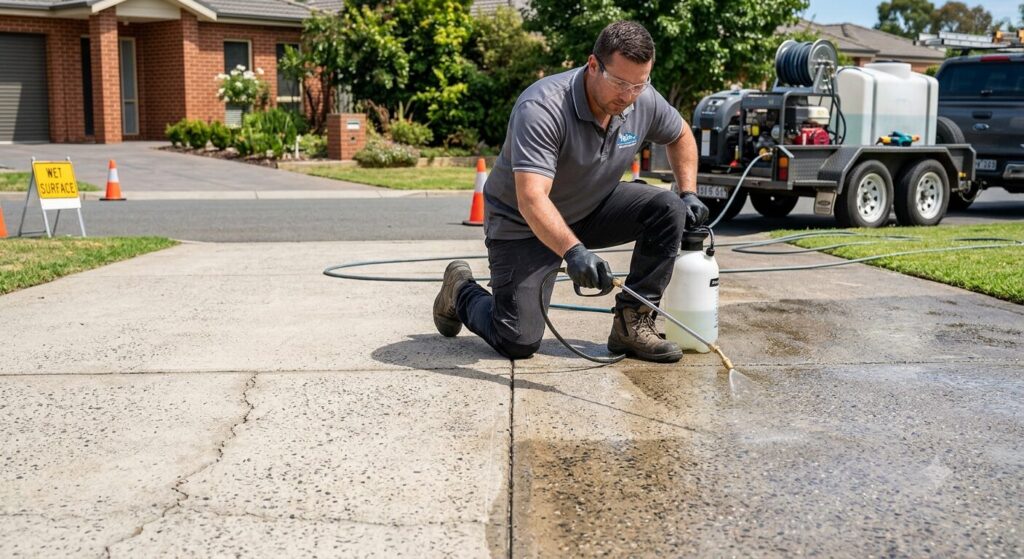
Concrete is stronger than many other outdoor surfaces, but that does not mean it can handle unlimited pressure. Using the wrong nozzle, holding the wand too close, or cleaning unevenly can leave lines, marks, or surface damage.
DIY pressure washing can also push stains around instead of removing them properly. A professional cleaning team understands how to choose the right pressure, cleaning pattern, and method for the condition of the concrete. This helps create a cleaner and more consistent result.
Be Careful With Harsh Chemicals
Some homeowners try strong chemicals to remove oil, rust, algae, or dark stains from concrete. While certain cleaners can be useful, the wrong product may create discoloration, damage nearby plants, or leave residue that attracts more dirt.
Before applying any cleaner, it is important to understand what caused the stain and what type of surface you are treating. When in doubt, it is safer to ask a professional exterior cleaning company to assess the area.
Consider Sealing Concrete When Appropriate
Some concrete surfaces may benefit from sealing, especially areas exposed to frequent staining, moisture, or heavy traffic. A sealer can help reduce how quickly water, dirt, and stains absorb into the surface.
However, sealing is not always the right solution for every surface. The concrete should be cleaned properly before sealing, and the right product should be selected based on the surface type and usage. Applying sealer over dirty or stained concrete can trap marks underneath, so preparation is important.
Schedule Professional Cleaning Before the Surface Looks Too Far Gone
Many property owners wait until concrete looks extremely dirty before scheduling cleaning. The problem is that stains, algae, and dirt become harder to remove the longer they sit. Regular professional cleaning can help protect the surface and keep it from reaching that heavily stained stage.
Professional pressure washing is especially helpful for driveways, sidewalks, patios, walkways, and commercial concrete areas because it removes embedded dirt more effectively than a garden hose or basic scrubbing. It can also help improve curb appeal quickly.
Common Concrete Problems and How to Help Prevent Them
| Concrete Problem | Common Cause | Simple Prevention Tip |
| Oil and grease stains | Vehicles, grills, outdoor equipment | Clean spills quickly and schedule deep cleaning when stains settle in |
| Dark algae or mildew patches | Shade, humidity, standing moisture | Keep surfaces clear and clean damp areas regularly |
| Dirt and tire marks | Vehicle traffic and soil buildup | Sweep often and pressure wash when buildup becomes embedded |
| Leaf and organic stains | Wet leaves, mulch, pollen, plant debris | Remove debris before it sits too long |
| Weather discoloration | Rain, sun exposure, moisture, general wear | Maintain routine cleaning and improve drainage where possible |
How Around The Bend Pressure Washing Can Help
Around The Bend Pressure Washing provides professional exterior cleaning services for residential and commercial properties in Tallahassee, FL. Our team understands that concrete surfaces need the right balance of pressure, cleaning technique, and surface care to remove dirt without creating uneven marks or unnecessary damage.
Whether you need driveway cleaning, sidewalk cleaning, patio cleaning, pool deck cleaning, or commercial concrete cleaning, we can help restore a cleaner appearance and improve the curb appeal of your property.
Our team is fully licensed and insured, and we focus on safe, reliable, high-quality results from start to finish.
Final Thoughts
Concrete is durable, but it still needs proper care. Stains, dirt, algae, mildew, and weather exposure can build up over time and make outdoor surfaces look neglected. By removing debris regularly, addressing stains early, managing moisture, and scheduling professional cleaning when needed, you can help protect your concrete and keep your property looking clean.
If your driveway, sidewalk, patio, walkway, or other concrete surface is starting to look dirty or stained, Around The Bend Pressure Washing can help.
| Need help cleaning and protecting your concrete surfaces? Call Around The Bend Pressure Washing at 850-888-2105 for professional exterior cleaning in Tallahassee, FL. |
FAQ Ideas for This Blog
How often should it be professionally cleaned?
Most surfaces benefit from professional cleaning at least once a year, but shaded, high-traffic, or heavily stained areas may need cleaning more often.
Can pressure washing damage concrete?
Yes, if the wrong pressure, nozzle, or cleaning technique is used. Professional cleaning helps reduce the risk of surface marks or uneven results.
What causes black or green stains on it?
Black or green stains are often caused by algae, mildew, organic growth, moisture, or dirt buildup, especially in shaded or damp areas.
Should concrete be sealed after cleaning?
Some surfaces may benefit from sealing, but the surface should be properly cleaned first and assessed based on usage and condition.