A clean patio can make your outdoor space feel more comfortable, welcoming, and ready to use. Whether your patio is used for relaxing, grilling, entertaining guests, or connecting your home to the backyard, it is one of the exterior areas that can collect dirt quickly throughout the year.
In Tallahassee, patios are exposed to humidity, rain, pollen, leaves, shade, algae, mildew, food spills, and daily foot traffic. Over time, these can make the surface look dull, stained, slippery, or poorly maintained. The good news is that a few simple habits can help your patio stay cleaner between professional exterior cleaning services.
Around The Bend Pressure Washing is a locally owned, licensed, and insured pressure washing company serving Tallahassee, FL. We help homeowners clean and protect patios, pool decks, sidewalks, driveways, pavers, and other outdoor surfaces with safe and effective cleaning methods.
Why Patio Cleaning Matters
Your patio is exposed to more than just dirt. Moisture, shade, organic debris, and outdoor use can all create buildup on the surface. If the patio is not maintained, stains can settle deeper, algae and mildew can spread, and the area can become less safe to walk on.
Keeping your patio clean helps improve curb appeal, protects the surface, and makes the space more enjoyable for your family and guests. It also helps prevent small cleaning issues from turning into larger maintenance problems.
Sweep or Blow Off Debris Regularly
Leaves, pine needles, grass clippings, branches, and dirt can trap moisture on your patio. When debris sits for too long, it can leave stains and create the damp conditions that algae and mildew need to grow.
A quick sweep or use of a leaf blower once a week can make a big difference. This is especially helpful after storms, windy days, lawn mowing, or heavy tree shedding. Keeping the surface clear allows the patio to dry faster and stay cleaner longer.
Rinse Away Loose Dirt and Pollen
Pollen, dust, and loose soil can build up quickly on patios, especially during seasonal changes. A gentle rinse with a garden hose can help remove light buildup before it settles into the surface.
Avoid using too much pressure on delicate surfaces such as older concrete, pavers, painted patios, natural stone, or sealed surfaces. A light rinse is for maintenance only. If the patio already has heavy staining, algae, or mildew, professional cleaning may be the safer option.
Clean Up Food, Drink, and Grease Spills Quickly
Patios are often used for outdoor dining, grilling, and entertaining. Food spills, soda, coffee, grease, sauce, and cooking oils can leave marks if they are allowed to sit. Grease can be especially difficult to remove once it soaks into porous materials.
When spills happen, clean them as soon as possible. Blot liquids instead of spreading them around, then rinse the area gently. For stubborn stains, avoid harsh chemicals unless you are sure they are safe for your patio surface.
Watch for Shaded and Damp Areas
Algae and mildew often grow faster in shaded areas that do not dry quickly. Patio corners, areas near fences, sections under trees, and spots close to downspouts may collect moisture longer than open areas.
Check these areas regularly. If you notice green, black, or dark patches starting to appear, it may be a sign that the patio needs attention. Early cleaning can help prevent buildup from spreading across the entire surface.
Keep Plants and Landscaping Trimmed Back
Plants, bushes, and tree branches can drop leaves and create shade over the patio. While landscaping adds beauty, it can also keep the patio damp and make it harder for the surface to dry after rain.
Trim back overgrown plants and remove low-hanging branches where possible. Better airflow and sunlight can help reduce moisture, which helps slow down algae and mildew growth.
Check Drainage Around the Patio
Poor drainage is one of the common reasons patios become dirty, stained, or slippery. If water pools on the surface after rain, it can carry dirt, soil, mulch, and organic material onto the patio.
Make sure water is flowing away from it when possible. Check nearby gutters, downspouts, soil levels, and landscape beds. If water is constantly washing across it, cleaning alone may not solve the problem long term.
Be Careful With DIY Pressure Washing
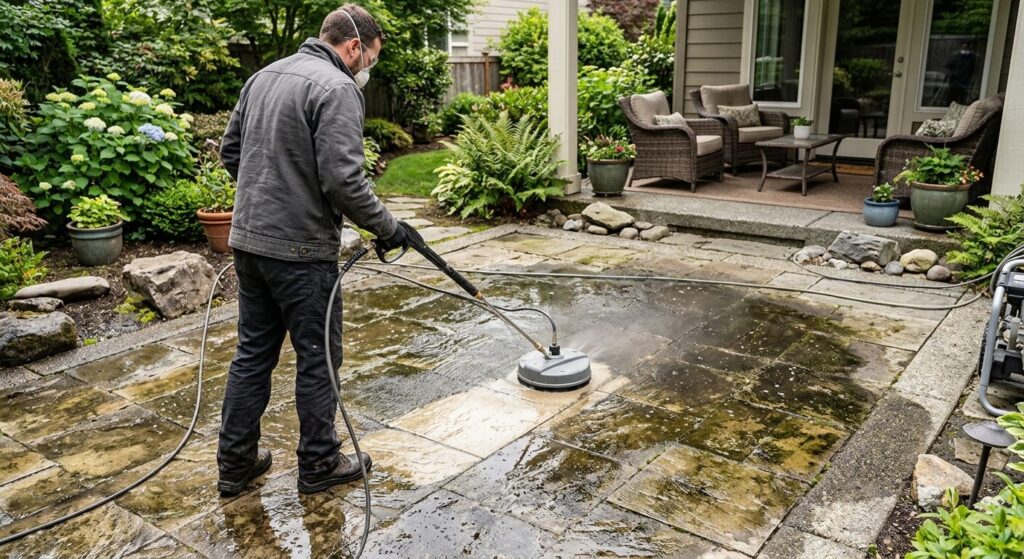
Pressure washing may seem simple, but using the wrong pressure, nozzle, or cleaning method can damage the surface. Concrete, pavers, brick, natural stone, painted areas, and sealed patios may all require different cleaning approaches.
Too much pressure can leave lines, remove joint sand, damage sealers, chip the surface, or push water into areas where it should not go. For routine maintenance, gentle cleaning is usually better. For heavy buildup, professional cleaning can help protect it while restoring a cleaner appearance.
Know When it Needs Professional Cleaning
Some patio buildup cannot be removed with sweeping or rinsing. If you see dark staining, slippery spots, algae, mildew, embedded dirt, rust marks, or uneven discoloration, your patio may need professional exterior cleaning.
A professional cleaning company can inspect the surface, choose the right method, and clean without using unnecessary pressure. This is especially important for pavers, stone, older concrete, and sealed surfaces.
Simple Maintenance Checklist
• Sweep or blow off leaves, dirt, and debris weekly.
• Rinse light pollen and dust with a garden hose when needed.
• Clean up food, drink, grease, and oil spills quickly.
• Trim plants and branches near the patio.
• Watch shaded and damp areas for algae or mildew growth.
• Check gutters, downspouts, and drainage near the patio.
• Avoid harsh chemicals that may damage the surface.
• Schedule professional cleaning when buildup becomes difficult to remove.
Frequently Asked Questions
How often should I clean my patio?
Most benefit from light weekly maintenance and professional cleaning when stains, algae, mildew, or heavy dirt buildup become noticeable. In humid areas like Tallahassee, shaded areas may need attention more often.
Can I pressure wash it myself?
Some can be damaged by too much pressure, especially pavers, natural stone, sealed surfaces, painted areas, and older concrete. If you are unsure, it is safer to ask a professional before using high pressure.
Why does my outdoor get dirty again so quickly?
Common causes include shade, humidity, tree debris, pollen, poor drainage, sprinkler overspray, food spills, and heavy foot traffic. Reducing moisture and clearing debris can help stay cleaner longer.
What is the best way to remove algae?
The best method depends on the surface. Some need a surface-safe cleaning solution and controlled rinsing instead of high pressure. Professional cleaning helps remove buildup while protecting the surface.
Should it be sealed after cleaning?
Some surfaces, especially pavers, may benefit from sealing after cleaning. Sealing can help protect the surface, improve appearance, and reduce how quickly stains absorb. The right choice depends on the material and condition.
Need Help Keeping Your Outdoor Clean Year-Round?
If it is starting to look stained, dull, slippery, or covered with algae and mildew, Around The Bend Pressure Washing can help. Our team provides professional exterior cleaning services for pool decks, driveways, sidewalks, pavers, and more throughout Tallahassee, FL.
Call 850-888-2105 to schedule professional cleaning or request help choosing the safest cleaning method for your outdoor surface.