Every outdoor surface around your home is different. Concrete, vinyl siding, brick, pavers, stone, wood, and pool decks may all collect dirt, algae, mildew, stains, and weather buildup, but they should not always be cleaned the same way.
Using the wrong cleaning method can cause streaks, surface damage, loose material, water intrusion, or slippery areas. That is why knowing the type of surface you have is the first step before choosing between pressure washing, soft washing, surface cleaning, or a more careful hand-cleaning approach.
Around The Bend Pressure Washing provides professional exterior cleaning services in Tallahassee, FL for residential and commercial properties. This simple guide explains how to identify common outdoor surfaces and understand which cleaning method is usually best for each one.
Quick Exterior Surface Cleaning Guide
| Surface Type | Common Problem | Best Cleaning Approach |
| Concrete driveways and sidewalks | Dirt, tire marks, algae, mildew, oil spots | Professional pressure washing with surface cleaning equipment |
| Vinyl siding | Algae, mildew, oxidation, dirt streaks | Soft washing with low pressure and safe cleaning solution |
| Brick surfaces | Mold, mildew, dirt in pores, loose mortar concerns | Controlled cleaning with the right pressure and solution |
| Pavers | Weeds, sand loss, algae, stains, dull color | Careful cleaning, joint protection, and possible sealing |
| Natural stone | Dark buildup, organic growth, delicate texture | Gentle cleaning based on the stone type |
| Wood decks or fences | Mildew, gray weathering, soft grain damage risk | Low-pressure cleaning and careful technique |
| Pool decks and patios | Algae, dirt, slippery buildup | Cleaning that removes growth without leaving unsafe residue |
Concrete Exterior Driveways and Sidewalks
Concrete is one of the strongest exterior surfaces, but it still needs the correct cleaning method. Driveways and sidewalks often collect tire marks, oil stains, rust marks, dirt, algae, and mildew. Because concrete is durable, it can usually handle professional pressure washing when the equipment is used correctly.
The best method is often a combination of pressure washing and a surface cleaner. A surface cleaner helps create a more even result than using a wand alone because it cleans the area consistently instead of leaving lines or streaks.
However, older concrete, cracked concrete, or painted concrete may need a more careful approach. Too much pressure can make weak areas worse or leave visible marks.
Vinyl Siding
Vinyl siding should not be cleaned with strong direct pressure. Although it may look sturdy, high pressure can force water behind the siding, loosen panels, or create uneven cleaning marks.
For vinyl siding, soft washing is usually the safer choice. Soft washing uses low pressure with the right cleaning solution to break down algae, mildew, and dirt without damaging the siding. This method is especially useful for homes in humid areas like Tallahassee where organic growth can return quickly.
Brick Surfaces
Brick is strong, but it is also porous. It can hold dirt, moisture, algae, and mildew in small surface openings. Some brick surfaces can handle controlled pressure washing, but older brick or weak mortar joints may need a gentler process.
Before cleaning brick, it is important to check for loose mortar, cracks, or surface wear. A professional cleaner can adjust the pressure, cleaning solution, and rinsing method based on the condition of the brick.
Pavers
Pavers are commonly used for patios, walkways, pool decks, and driveways. They can collect weeds, algae, sand loss, stains, and dark buildup between the joints.
The cleaning method for pavers should remove grime without blasting away too much joint sand or damaging the surface. After cleaning, some paver areas may also benefit from sealing to help protect color, reduce staining, and slow future growth.
Natural Stone
Natural stone surfaces can include flagstone, limestone, travertine, slate, and other decorative stone materials. These surfaces often require extra care because not all stone reacts the same way to pressure or cleaning solutions.
Some stone can be cleaned with a controlled rinse and mild solution, while softer stone may need a gentler approach. The safest method depends on the stone type, age, texture, and current condition.
Wood Decks and Fences
Wood can be easily damaged by too much pressure. A high-pressure stream can cut into the grain, create fuzzy fibers, leave marks, or remove too much of the surface layer.
For wood decks and fences, a lower-pressure cleaning method is usually best. The goal is to remove mildew, dirt, and weather buildup while protecting the structure and natural texture of the wood.
Pool Decks and Patios
Pool decks and patios need careful cleaning because safety matters. These areas can become slippery when algae, mildew, dirt, or leftover cleaning residue sits on the surface.
The best method depends on the material. Concrete pool decks may need surface cleaning, while pavers, stone, or coated surfaces may need a softer method. A professional cleaning process should remove buildup and rinse thoroughly so the area is safer to walk on.
How to Choose the Right Cleaning Method
Check the material first. Identify whether the surface is concrete, vinyl, brick, pavers, stone, wood, painted material, or coated material.
Look at the condition. Cracks, loose mortar, peeling paint, weak wood, and aging surfaces may require a gentler cleaning method.
Identify the type of buildup. Dirt, algae, mildew, oil, rust, and leaf stains may need different cleaning solutions and techniques.
Avoid guessing with pressure. More pressure does not always mean better cleaning. The goal is to clean the surface safely, not force damage into it.
Use professional help for delicate surfaces. If you are not sure what the surface can handle, it is safer to ask a trained exterior cleaning company before attempting DIY cleaning.
Why the Wrong Method Can Cause Problems
Using the wrong exterior cleaning method can create damage that is more expensive than the original cleaning job. High pressure can strip paint, scar wood, loosen paver sand, push water behind siding, damage mortar, or leave uneven lines on concrete.
On the other hand, using too gentle of a method may not fully remove algae, mildew, stains, or slippery buildup. The best exterior cleaning method is the one that matches the surface, the condition, and the type of buildup.
When to Call a Professional Exterior Cleaning Company
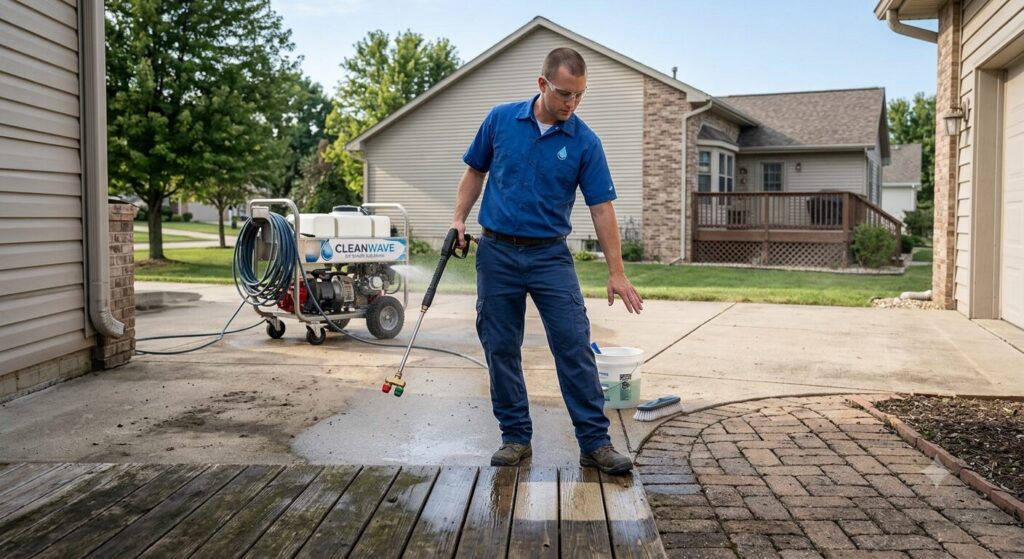
You should consider calling a professional if the surface is delicate, heavily stained, close to electrical areas, covered in slippery algae, or if you are unsure whether pressure washing is safe.
Around The Bend Pressure Washing is licensed and insured, giving homeowners and business owners in Tallahassee peace of mind when cleaning important exterior surfaces. Our team uses safe, effective methods for house washing, driveway and sidewalk cleaning, patios, pool decks, paver cleaning and sealing, and commercial pressure washing.
Final Thoughts
The best way to clean an exterior surface starts with knowing what type of surface you have. Concrete, vinyl siding, brick, pavers, stone, wood, patios, and pool decks all need different levels of pressure, cleaning solution, and care.
If you want your property cleaned safely and professionally, Around The Bend Pressure Washing can help choose the right method for your surface and restore your exterior without unnecessary damage.
Need help choosing the right cleaning method for your property?
Call Around The Bend Pressure Washing at 850-888-2105 for licensed and insured exterior cleaning in Tallahassee, FL.