Patios, walkways, and driveways are some of the most used outdoor areas around a home. They collect dirt, mud, tire marks, leaves, algae, mildew, and stains throughout the year. In a warm and humid area like Tallahassee, these surfaces can start looking dull or slippery faster than many homeowners expect.
The right cleaning method depends on the surface material, the condition of the area, and the type of buildup being removed. Concrete, pavers, brick, stone, and pool-adjacent patios do not always need the same pressure level or cleaning approach. Using too much pressure can cause damage, while using too little may leave stains and organic growth behind.
This guide explains how homeowners can understand the best way to clean patios, walkways, and driveways while protecting the surface and improving curb appeal.
Why Patios, Walkways, and Driveways Need Regular Cleaning
Outdoor surfaces are constantly exposed to weather, foot traffic, vehicles, landscaping debris, and moisture. Over time, these elements can create visible staining and unsafe walking areas.
Common buildup on patios, walkways, and driveways includes:
- Dirt and dust from daily use
- Algae and mildew from moisture and shade
- Oil and tire marks from vehicles
- Leaf stains and organic residue
- Mud, pollen, and grime
- Weeds or moss growing between pavers
- Slippery areas caused by algae or moisture buildup
When these surfaces are cleaned properly, the property looks brighter, safer, and better maintained. Regular exterior cleaning can also help prevent buildup from becoming harder to remove later.
Start by Identifying the Surface Material
Before cleaning, the first step is knowing what type of surface you are working with. The surface material affects the pressure level, cleaning solution, and technique that should be used.
Common outdoor surface types include:
- Concrete driveways and sidewalks
- Brick walkways
- Paver patios and driveways
- Natural stone surfaces
- Stamped concrete
- Painted or coated patios
- Pool decks and textured concrete
Concrete can usually handle more pressure than softer or decorative surfaces, but it still needs the right equipment and technique. Brick, pavers, and stone require more care because high pressure can loosen sand, chip edges, or affect the finish.
Simple Cleaning Method Guide
Here is a simple guide to help homeowners understand which method is commonly used for each surface:
| Surface | Recommended Cleaning Approach | Important Note |
| Concrete driveway | Pressure washing with proper surface cleaner | Good for dirt, tire marks, and general grime |
| Concrete walkway | Pressure washing with controlled pressure | Helps remove algae and improve appearance |
| Paver patio or driveway | Low-to-moderate pressure with proper cleaning solution | Avoid washing out joint sand |
| Brick walkway | Gentle pressure with surface-safe cleaning | High pressure may damage mortar or edges |
| Natural stone | Soft or low-pressure cleaning depending on stone type | Some stone surfaces are more delicate |
| Pool deck | Controlled cleaning with slip-safety focus | Avoid leaving residue that can make the surface slick |
| Painted/coated patio | Gentle cleaning method | Strong pressure may peel or damage coating |
Best Way to Clean Driveways
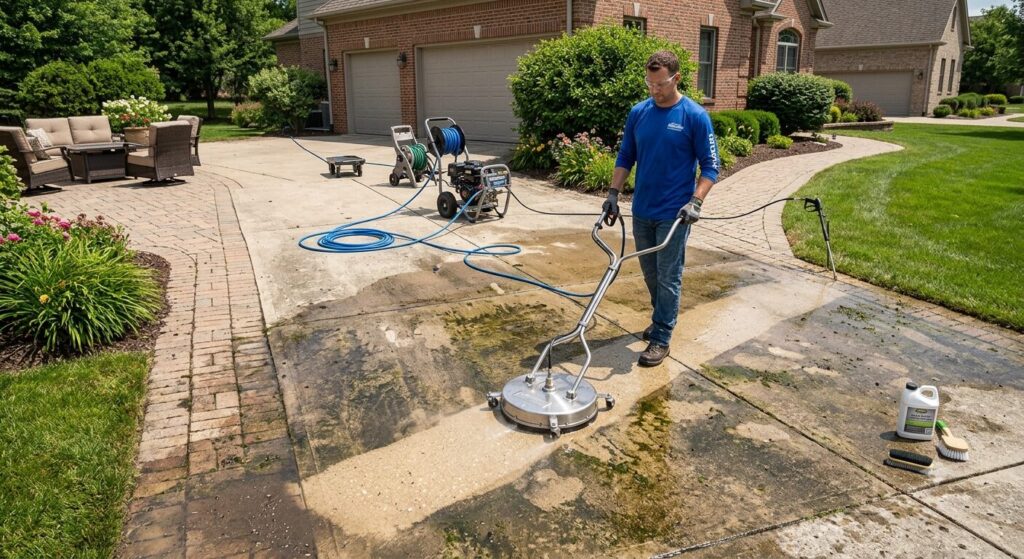
Driveways are usually one of the toughest exterior surfaces because they handle vehicles, oil spots, tire marks, mud, and daily wear. Concrete driveways often respond well to professional pressure washing, especially when a surface cleaner is used.
A surface cleaner helps create a more even result compared to using a wand alone. It reduces streaking and helps clean larger areas more consistently.
For driveway cleaning, the process usually includes:
- Inspecting the driveway for cracks, stains, or damaged areas
- Removing loose debris such as leaves and dirt
- Pretreating stains, algae, or mildew when needed
- Cleaning the concrete with the right pressure and equipment
- Rinsing the area properly to remove residue
- Checking for remaining stains that may need additional treatment
Oil stains, rust marks, and deep discoloration may require special treatment. While cleaning can greatly improve the look of the driveway, some older stains may not disappear completely after one wash.
Best Way to Clean Walkways
Walkways should be cleaned carefully because they are high-traffic areas for family members, guests, and customers. Dirt and algae can make walkways look neglected and may also create slippery spots.
The best cleaning method depends on whether the walkway is concrete, brick, paver, or stone. Concrete walkways can usually be cleaned with controlled pressure. Brick and paver walkways often need a gentler approach to avoid shifting, loosening, or damaging the surface.
Walkway cleaning is especially helpful around:
- Front entrances
- Side yards
- Garden paths
- Commercial storefront paths
- Pool or patio access areas
- Walkways shaded by trees or landscaping
Because walkways are used frequently, keeping them clean can make the property look more welcoming while also helping reduce slippery buildup.
Best Way to Clean Patios
Patios can be made from several materials, including concrete, pavers, brick, stone, tile, or coated surfaces. Because patios are often used for relaxing, grilling, and entertaining, they can collect food spills, furniture marks, algae, mildew, and dirt.
Before cleaning a patio, it is important to move furniture, plants, decorations, and loose items away from the area. This allows the surface to be cleaned evenly and reduces the risk of damaging personal items.
For patios, the safest method often includes:
- Using the right pressure for the surface type
- Applying surface-safe cleaning solutions when needed
- Avoiding damage to nearby landscaping
- Rinsing thoroughly so residue is not left behind
- Checking corners, edges, and shaded areas where algae may grow
A patio does not always need aggressive pressure. In many cases, the right cleaning solution and technique matter more than force.
When Soft Washing May Be Better Than Pressure Washing
Some surfaces should not be cleaned with high pressure. Soft washing or low-pressure cleaning may be better for delicate materials, painted areas, or surfaces where high pressure could cause damage.
Soft washing may be the better option for:
- Painted patios
- Older brick or fragile mortar
- Certain natural stone surfaces
- Vinyl siding near patio areas
- Decorative or coated concrete
- Surfaces with delicate finishes
The goal is to remove dirt, algae, and mildew without harming the surface. A professional exterior cleaning company can inspect the area and decide whether pressure washing, soft washing, or a combination of both is the safest choice.
Common Mistakes Homeowners Should Avoid
Cleaning outdoor surfaces may look simple, but using the wrong method can lead to costly damage. Homeowners should avoid these common mistakes:
- Using too much pressure on pavers, brick, or stone
- Holding the pressure washer nozzle too close to the surface
- Using the wrong cleaning solution for the material
- Skipping pretreatment for algae, mildew, or stains
- Cleaning unevenly and leaving streaks
- Forgetting to protect plants, doors, and nearby surfaces
- Ignoring cracks, loose pavers, or damaged areas before cleaning
The safest approach is to match the cleaning method to the surface. More pressure does not always mean better results. Proper technique is what helps create a clean, even, and safe finish.
How Often Should These Surfaces Be Cleaned?
The ideal cleaning schedule depends on the amount of shade, moisture, traffic, and buildup around the property. In Tallahassee, humidity and rain can make algae and mildew return faster, especially in shaded areas.
As a general guide:
- Driveways may need cleaning once or twice a year, depending on staining and vehicle traffic.
- Walkways may need cleaning more often if they become slippery or collect algae.
- Patios may need seasonal cleaning, especially before outdoor gatherings or after heavy pollen and rain.
- Paver areas may need cleaning and sealing on a longer maintenance schedule depending on condition.
If the surface looks dark, slippery, stained, or covered in algae, it may be time to schedule a professional cleaning.
Why Professional Cleaning Helps
Professional pressure washing helps homeowners avoid the guesswork of choosing the right pressure, equipment, and cleaning solution. Around The Bend Pressure Washing uses safe and effective cleaning methods for different exterior surfaces, including patios, walkways, driveways, sidewalks, pool decks, and pavers.
A professional cleaning service can help with:
- Choosing the right method for each surface
- Removing dirt, algae, mildew, and grime
- Improving curb appeal
- Reducing slippery buildup on walking areas
- Protecting delicate surfaces from unnecessary damage
- Delivering a cleaner and more even result
Because the company is licensed and insured, homeowners can have peace of mind knowing their property is being handled with care.
Final Thoughts
Patios, walkways, and driveways play a major role in the appearance and safety of a property. The best cleaning method depends on the surface material, the type of buildup, and the condition of the area. Concrete driveways may need pressure washing, while pavers, brick, stone, and coated patios may require a gentler approach.
By choosing the right cleaning method, homeowners can restore curb appeal, reduce slippery buildup, and protect outdoor surfaces from unnecessary damage.
Need Patio, Walkway, or Driveway Cleaning in Tallahassee?
Around The Bend Pressure Washing provides professional exterior cleaning services for residential and commercial properties in Tallahassee, FL. From driveway and sidewalk cleaning to patio, pool deck, and paver cleaning, our team can help restore your outdoor surfaces safely and effectively.
Call Around The Bend Pressure Washing today at 850-888-2105 to schedule professional exterior cleaning for your home or business.