Dirt, algae, and mildew can make outdoor surfaces look old, stained, and poorly maintained. In a humid area like Tallahassee, FL, these problems can show up on siding, concrete, pavers, patios, pool decks, walkways, fences, and commercial exterior surfaces.
The best way to remove buildup depends on the surface type, the condition of the material, and how deeply the growth has settled in. Some surfaces can handle pressure washing, while others need soft washing or a more controlled cleaning method to avoid damage.
Around The Bend Pressure Washing is a locally owned, licensed, and insured exterior cleaning company serving Tallahassee, FL. Our team helps homeowners and commercial property owners remove dirt, algae, mildew, and exterior buildup using safe and effective cleaning methods.
Why Dirt, Algae, and Mildew Build Up Outdoors
Outdoor surfaces are constantly exposed to rain, humidity, shade, pollen, leaves, soil, and everyday foot or vehicle traffic. Over time, these conditions create a layer of buildup that can make surfaces look dark, green, slippery, or stained.
In Florida, moisture and warm weather can make algae and mildew return faster, especially in shaded areas around trees, rooflines, patios, fences, and pool decks.
The Difference Between Dirt, Algae, and Mildew
Dirt is usually surface-level buildup from dust, soil, pollen, leaves, and traffic. Algae often appears as green, dark, or slippery growth on concrete, siding, pavers, and shaded areas. Mildew is a type of surface fungus that can leave dark spotting or a musty-looking film.
Each type of buildup may need a slightly different cleaning approach. That is why it is important to choose the right combination of cleaning solution, dwell time, water pressure, and rinsing method.
Start With the Surface Type
Before cleaning begins, the first step is identifying the surface. Concrete, vinyl siding, brick, pavers, wood, stucco, stone, and pool deck materials do not all react the same way to water pressure or cleaning solutions.
A strong concrete driveway may need pressure washing, while siding, painted surfaces, stucco, and roofing materials may need a softer method. Choosing the wrong method can cause marks, water intrusion, stripped paint, or surface damage.
Use Pressure Washing for Stronger Hard Surfaces
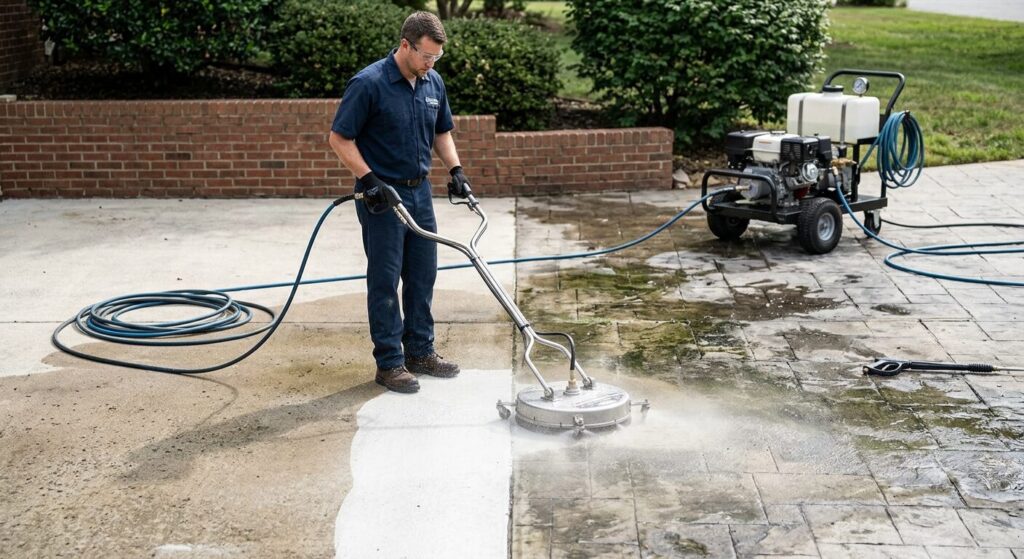
Pressure washing is often effective for durable surfaces like many concrete driveways, sidewalks, walkways, and some commercial exterior areas. It helps remove dirt, algae, tire marks, grime, and surface stains when used with the correct pressure and equipment.
For concrete, professional equipment can create a more even result compared to random spray patterns from DIY cleaning. Surface cleaners are often used to reduce streaks and clean large flat areas more consistently.
Use Soft Washing for Delicate or Vertical Surfaces
Soft washing is usually better for surfaces that can be damaged by high pressure, such as vinyl siding, stucco, painted areas, certain fences, and some exterior walls. Instead of relying on force, soft washing uses a cleaning solution and low-pressure rinsing.
This method helps loosen algae, mildew, and dirt without blasting the surface. It is especially helpful for exterior home cleaning where water pressure needs to be controlled carefully.
Do Not Just Blast Algae and Mildew Away
Algae and mildew are not always removed properly by pressure alone. High pressure may make the surface look cleaner at first, but if the organic growth is not treated correctly, it can return quickly.
A proper cleaning process treats the buildup first, allows the solution to work, and then rinses the surface safely. This helps improve the final result and reduces the chance of leaving behind active growth.
Clean Shaded Areas More Carefully
Shaded areas often collect more algae and mildew because they stay damp longer after rain or irrigation. These areas may include the north side of a house, under trees, near fences, around patios, and along walkways.
Because these spots can also become slippery, they should be cleaned with care. The goal is to remove buildup while protecting the material underneath.
How to Clean Driveways and Sidewalks
Driveways and sidewalks usually collect dirt, tire marks, algae, mildew, leaves, and foot traffic buildup. For many concrete surfaces, pressure washing with the right equipment is an effective cleaning method.
However, cracked concrete, decorative finishes, sealed concrete, and older surfaces may need a more careful approach. A professional cleaner can inspect the condition before using pressure.
How to Clean Patios and Pool Decks
Patios and pool decks need special attention because buildup can make them slippery. Cleaning should remove dirt and organic growth without leaving behind residue that could create a slick surface.
The best method depends on the material. Concrete, pavers, textured coatings, and natural stone may each need a different approach to keep the area cleaner and safer for regular use.
How to Clean Pavers, Brick, and Stone
Pavers, brick, and stone can collect algae and mildew between joints, around edges, and in shaded areas. These surfaces may need controlled pressure, proper rinsing, and care around sand joints, mortar, or sealers.
If pavers are sealed or loose, the cleaning method should be adjusted to avoid stripping the sealer, washing out joint sand, or damaging the surface finish.
How to Clean Siding and Exterior Walls
Siding and exterior walls can develop dirt, mildew, pollen, and algae streaks over time. For many homes, soft washing is the safer method because it removes buildup without forcing water behind siding or damaging the exterior finish.
A careful rinse is important around windows, doors, vents, electrical fixtures, and landscaping.
Preventing Dirt, Algae, and Mildew From Coming Back Quickly in outdoor surfaces
No outdoor surface stays clean forever, but regular maintenance can help slow down buildup. Trimming overgrown plants, improving drainage, reducing leaf piles, and scheduling routine outdoor surface cleaning can help surfaces stay cleaner longer.
For areas that collect moisture often, a seasonal or annual cleaning schedule may be helpful.
Why Professional Cleaning in outdoor surfaces Is Safer Than Guessing
DIY pressure washing can seem simple, but using the wrong pressure or cleaning solution can damage siding, concrete, pavers, wood, stucco, and painted surfaces. Professional cleaning helps reduce that risk because the method is adjusted based on the surface.
Around The Bend Pressure Washing uses safe, effective cleaning methods on outdoor surfaces for residential and commercial properties throughout Tallahassee, FL.
Choose Around The Bend Pressure Washing in Tallahassee, FL
Around The Bend Pressure Washing provides professional house washing, driveway and sidewalk cleaning, patio and pool deck cleaning, paver cleaning and sealing, and commercial pressure washing services.
If dirt, algae, or mildew are making your outdoor surfaces look stained, slippery, or worn down, our team can help restore curb appeal and protect your property with the right cleaning method.
Best Cleaning Method by Surface Type
| Surface | Common Buildup | Recommended Method | Why It Matters |
| Concrete driveways | Dirt, tire marks, algae, mildew | Pressure washing with proper equipment | Helps clean large hard surfaces evenly |
| Sidewalks and walkways | Foot traffic, algae, grime | Pressure washing or surface cleaning | Improves appearance and reduces slippery buildup |
| Vinyl siding | Mildew, pollen, algae streaks | Soft washing | Avoids forcing water behind siding |
| Pavers and brick | Algae, dirt between joints, stains | Controlled pressure and proper rinsing | Protects joints, sealers, and surface finish |
| Pool decks | Algae, mildew, dirt, slippery film | Surface-specific cleaning method | Helps reduce buildup without creating a slick surface |
| Stucco or painted surfaces | Mildew and exterior staining | Low-pressure or soft washing | Helps prevent chipping, streaks, or paint damage |
Frequently Asked Questions
What is the best way to remove algae from outdoor surfaces?
The best method depends on the surface. Durable concrete may need pressure washing, while siding, stucco, and painted surfaces usually need soft washing.
Can pressure washing remove mildew in outdoor surfaces?
Yes, pressure washing can remove mildew from some hard surfaces, but many delicate surfaces need a cleaning solution and low-pressure rinse instead of high pressure.
Why does algae keep coming back after cleaning in outdoor surfaces?
Algae often returns because of moisture, shade, humidity, and untreated organic growth. Proper cleaning and regular maintenance can help slow down the return.
Is mildew on outdoor surfaces dangerous?
Mildew and algae can make surfaces look dirty and may contribute to slippery areas, especially on walkways, patios, and pool decks.
How often should outdoor surfaces be cleaned in Tallahassee?
Many properties benefit from seasonal or annual cleaning, but shaded, damp, or high-traffic areas may need attention more often.
Need Help Removing Dirt, Algae, and Mildew in outdoor surfaces?
If dirt, algae, or mildew are taking over your outdoor surfaces, Around The Bend Pressure Washing can help. Call 850-888-2105 today to schedule professional exterior cleaning in Tallahassee, FL, and get the right cleaning method for your home or commercial property.