Pool cages are one of the most Florida-specific home features in existence — and one of the most maintenance-intensive exterior surfaces on your property. The combination of aluminum framing, fiberglass screen panels, and near-constant exposure to humidity, rainfall, pollen, and biological growth creates a cleaning challenge that most national exterior cleaning advice doesn’t really address.
In Tallahassee specifically, pool cage maintenance is a year-round consideration. The spring pollen season coats everything in yellow. Summer humidity keeps surfaces wet enough for algae to establish on both the frames and screens within weeks. Oak and pine debris from the area’s dense tree canopy settles into screen mesh and accumulates in frame channels. By fall, a pool cage that hasn’t been cleaned since spring looks neglected even on a well-maintained property.
Here’s what professional pool cage cleaning actually involves, what to look for before hiring someone, and how to keep your enclosure in shape between professional cleanings.
What Pool Cage Cleaning Actually Addresses
The visible issues on a Tallahassee pool cage are almost always biological in origin. Algae — the same cyanobacteria and green algae that grows on roofs and siding — colonizes the aluminum framing and fiberglass screen panels when conditions are damp and shaded. It appears as a green or gray-green haze, often heaviest on north-facing panels and areas under tree canopy. Mold and mildew follow similar patterns. Black spotting on the aluminum framing is typically mold; the gray film on screen fibers is usually a combination of algae, mildew, and airborne particulate that has bonded to the screen surface.
Oxidation is a separate issue specific to aluminum. The painted or anodized finish on aluminum pool cage frames weathers over time, developing a chalky, dull surface. Some oxidation is cosmetic; heavy oxidation that has compromised the underlying aluminum surface is a structural concern. Pool cage cleaning addresses surface oxidation and the biological growth that accelerates it, but cannot reverse deep oxidation damage to the metal.
The screen panels themselves accumulate embedded debris, spider webs, organic staining, and in some cases calcium or mineral deposits from pool water splash. Screens that appear dark or discolored from the inside often simply need cleaning — but screens with visible tears, holes, or sagging tension have moved past the cleaning stage and need re-screening.
Why Soft Washing Is the Right Method for Pool Cages
This is where a lot of well-intentioned DIY attempts go wrong. Pool cage frames and screen panels cannot tolerate high-pressure water. Aluminum frames — particularly the thinner horizontal and vertical members in budget enclosures — bend under direct high-pressure impact. Screen panels tear. Even in enclosures with heavier-gauge framing, high-pressure streams applied directly to screen mesh push the fiberglass weave out of alignment, create micro-tears that become full tears under wind stress, and physically push debris through the screen rather than removing it.
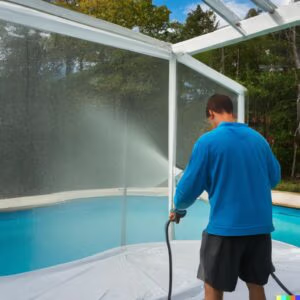
The correct technique is soft washing — applying a cleaning solution at 40–80 PSI (well below damage threshold) and allowing the chemistry to do the work. A sodium hypochlorite and surfactant solution applied to the frames and screens kills algae, mold, and mildew at the cellular level. The surfactant helps the solution penetrate the screen mesh and cling to the frame surface during dwell time. After 10–15 minutes, a gentle low-pressure rinse removes dead organic matter and residual solution.
Applied correctly, this approach cleans the screen surface without stressing the panel tension or the frame connections. It also provides residual biocide protection that keeps the enclosure cleaner longer between treatments — typically 6–12 months before meaningful regrowth appears in Tallahassee’s climate.
Pool Cage Cleaning Frequency in Tallahassee
The honest answer is that most Tallahassee pool cages need professional cleaning at least once per year, and many benefit from twice-yearly service. The specific factors that push toward more frequent cleaning are tree coverage, pool usage, and the cage’s orientation relative to sun and prevailing winds.
Homes in heavily wooded neighborhoods — Killearn Lakes, Waverly Hills, Ox Bottom, areas along Miccosukee Road, and many parts of Bradfordville — typically see faster buildup because the canopy keeps the cage shaded and damp while constantly depositing organic material. Oak pollen, pine needles, and Spanish moss fragments are particularly problematic; they settle into screen mesh and frame channels, retain moisture, and create a nutrient substrate that accelerates biological growth.
Cages on more open lots in Southwood, Crawfordville, or newer Midway subdivisions get more sun exposure and dry more quickly after rain, which slows biological growth. Once-yearly cleaning typically maintains appearance adequately for these properties.
Pool usage matters too — an actively used pool generates splash that deposits mineral-laden water on the lower frame sections and bottom screen panels. In hard-water areas, calcium scaling on these surfaces accumulates between professional cleanings. If you notice a white or gray crust developing on the lower cage sections near the pool deck, that’s mineral scale from pool water, not biological growth, and it requires an acidic treatment solution rather than the standard sodium hypochlorite mix.
What to Inspect Before and After Cleaning
A professional pool cage cleaning is also a good opportunity to assess the enclosure’s overall condition. Before the cleaning begins, a technician should note any screen panels with visible tears, holes, or sagging — these should be documented and quoted for re-screening if needed. Frame connections and corner brackets should be checked for corrosion or looseness; these are the failure points that lead to panel blowouts during storms.
After cleaning, with the biological growth removed, structural issues that were hidden under grime become visible. A clean cage that shows rust bleeding from screw holes, deep oxidation pitting in the aluminum, or screen panels that look thin and brittle after cleaning has moved into repair territory beyond what cleaning addresses. Getting this assessment done annually — with cleaning — is the practical way to stay ahead of enclosure maintenance rather than getting surprised by storm damage to a compromised structure.
Protecting Your Pool and Landscaping During Cleaning
The cleaning solution used in pool cage washing — sodium hypochlorite at 1–3% — will affect pool water chemistry if significant volumes enter the pool during treatment. Professional technicians typically keep the pool covered or use a tarp over the pool surface during chemical application, and rinse in a direction that minimizes solution drainage into the pool. Small amounts of diluted solution entering the pool water are generally not a concern; the chlorine concentration is comparable to a shock treatment, and pool chemistry recovers with normal circulation.
Poolside landscaping — particularly tropical plants and ornamental plantings in beds adjacent to the cage base — should be pre-wetted before treatment and rinsed after cleaning. Plants that are already saturated with water absorb significantly less chemical runoff. Most ornamental landscaping handles the brief chemical exposure without issue when proper pre-wetting and rinsing protocols are followed.
Between-Cleaning Maintenance
A few simple practices extend the time between professional cleanings and keep your enclosure looking better year-round. Brushing off accumulated organic debris — pollen, leaves, pine needles — from the screen panels and frame channels with a soft-bristle brush every few weeks during heavy pollen season prevents the debris from compacting and bonding to screen fibers. A garden hose rinse after heavy storms washes off surface deposits before they dry and stain. Keeping tree branches trimmed back from direct contact with the cage reduces organic debris and speeds drying.
These aren’t substitute for professional soft washing — once biological growth has established on the screen and frame surface, a garden hose won’t remove it. But they meaningfully extend the clean period after a professional treatment.
Professional Pool Cage Cleaning in Tallahassee
Around The Bend Pressure Washing provides professional pool cage and screen enclosure cleaning throughout the Tallahassee area, including Killearn Estates, Killearn Lakes, Betton Hills, Bradfordville, Southwood, Midtown, Crawfordville, Midway, Quincy, and Woodville. We use soft wash technique on all pool cage work — no high-pressure methods that risk screen and frame damage.
We also assess screen and frame condition as part of every cleaning and will flag any panels or structural issues that need attention. If your cage needs re-screening or frame repair, we can refer you to trusted enclosure contractors in the area who we’ve worked alongside on multi-trade jobs.
If your pool cage is showing the green haze or black spotting that Tallahassee’s climate reliably produces, give us a call at 850-888-2105 to schedule service. We’ll give you a straightforward quote and get it looking right.
1 thought on “Pool Cage Cleaning in Tallahassee: What It Takes to Keep Your Enclosure Looking Right”
Pingback: When to Call a Professional: Knowing When to Hire a Pressure Washing Expert - Tallahassee Pressure Washing Services