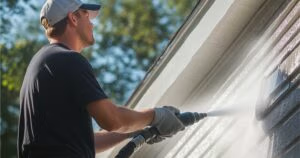
The Best Conditions for Pressure Washing in Tallahassee’s Climate
In most of the country, “good weather for pressure washing” means a warm dry day — simple enough. In Tallahassee and North Florida, the answer is more nuanced. The combination of year-round humidity, afternoon thunderstorm seasons, intense summer UV, clay soil runoff, and a biological growth environment that operates twelve months a year means that when you schedule exterior cleaning matters as much as how you clean. This guide covers the ideal conditions for pressure washing different surface types in North Florida, and what to avoid to ensure both results and safety.
Temperature: The Working Range
For standard cold-water pressure washing — driveways, concrete, hardscape — temperature is less critical than for soft wash applications. Cold water at 3,500 PSI cleans concrete effectively anywhere from 45°F to 100°F, and North Florida rarely sees temperatures outside that range during daylight working hours.
Soft wash applications using sodium hypochlorite are more temperature-sensitive. SH is most effective between 60°F and 85°F. Below 50°F, the chemical reaction slows significantly and dwell times need to be extended substantially to achieve the same biological kill rate. Above 90°F in direct summer sun, SH solutions can break down and evaporate faster than the recommended 10–20 minute dwell time allows — particularly on hot stucco or dark-colored roof surfaces. Professional crews schedule roof treatments and house washes in the morning hours during Tallahassee’s summer months (June–September) specifically to work in lower surface temperatures and avoid midday sun degradation of the cleaning solution.
Humidity and Drying Time
Tallahassee’s humidity rarely drops below 60–70% even on dry winter days, and runs 80–95% through much of the wet season. This affects two things: how quickly surfaces dry after cleaning, and whether soft wash chemistry can work properly on surfaces already saturated from recent rain.
For wood surfaces — decks, fences, wood siding — drying time after pressure washing matters enormously if staining or sealing is planned. Wood needs to reach below 15% moisture content before accepting penetrating stain. In Tallahassee’s summer humidity, this can take 72–96 hours of dry weather rather than the 48 hours that might be sufficient in a drier climate. Scheduling a deck clean-and-stain project requires planning around a weather window that includes adequate drying time — not just a dry day for the cleaning itself.
For soft wash applications on roofs and house exteriors, working on surfaces that are already wet from recent rain reduces the effective concentration of the cleaning solution and extends the time needed for adequate dwell. Ideally, soft wash is applied to surfaces that have been dry for at least 24 hours. In practice, during Tallahassee’s daily-rain wet season (May–September), professional crews work around the afternoon thunderstorm pattern — scheduling jobs for morning starts that allow application and dwell before the afternoon rain arrives, or scheduling for periods between storm systems.
Rain Forecast: Timing Around Tallahassee’s Wet Season
Tallahassee receives more than 60 inches of rain per year, with the wettest period running May through September. During this period, afternoon thunderstorms are nearly daily in July and August. A morning pressure washing job can be completed and dried before afternoon rain arrives, particularly if it’s a concrete and hardscape job where drying time is less critical.
For soft wash applications (house washing, roof treatment), rain within 4–6 hours of application can dilute the cleaning solution before adequate dwell time is reached and rinse away treatment before the biological kill is complete. Professional crews check forecasts carefully and avoid scheduling soft wash jobs when significant rain is expected within the day. Light rain after 4+ hours of dwell typically has minimal effect since the chemical reaction with biological organisms is substantially complete by that point.
For concrete sealing after pressure washing, rain within 24 hours of sealer application prevents proper curing and requires the sealing to be redone. Scheduling concrete sealing projects during dry weather windows — October through April in Tallahassee offers the most reliable dry stretches — produces better results and avoids costly rescheduling.
Wind: The Often-Overlooked Variable
Wind affects pressure washing in two ways: overspray control and soft wash chemical drift. In residential neighborhoods like Killearn Estates, Waverly Hills, and Midtown where lot lines are relatively close, high wind days mean soft wash chemical overspray can reach neighboring vehicles, landscaping, and surfaces beyond the work area. Professional crews avoid applying soft wash chemicals on days with sustained winds above 15–20 mph, particularly when neighboring properties are in the downwind direction.
Pressure washing overspray in windy conditions also affects surface cleaning quality — the operator is fighting the spray pattern rather than controlling it, which leads to uneven coverage, skipped sections, and longer job times. For most pressure washing work, light breezes (under 10 mph) are manageable; sustained wind above 20 mph calls for rescheduling or significantly adjusted technique.
Seasonal Windows: What Tallahassee Professionals Target
Experienced pressure washing crews in Tallahassee concentrate their most complex work — roof treatments, full-home soft wash, wood cleaning before staining — in two primary seasonal windows: late March through May (post-pollen, pre-wet season, mild temperatures) and October through November (post-wet season, before winter, dry stretches reliably available).
Homes in Bradfordville, Killearn Lakes, and Ox Bottom with heavy oak and pine canopy see the highest organic debris accumulation through the wet season — August and September cleaning for these properties often makes sense even within the wet season because the debris load is heavy enough that waiting until fall means surfaces are contaminated for months longer than necessary. The practical approach is morning scheduling, careful forecast checking, and accepting that perfect conditions are rare in North Florida — working within the good-enough window rather than waiting for ideal.
Concrete and Hardscape: Least Weather-Sensitive
Of all exterior cleaning tasks, concrete and hardscape pressure washing is the most weather-tolerant. Driveways, sidewalks, pool decks, and brick pavers can be cleaned effectively through most weather conditions short of active rain and freezing temperatures. Light overcast is actually preferable to direct summer sun for concrete cleaning — it allows the pre-treatment degreaser more working time before evaporation, and prevents the operator from working in excessive heat. Many Tallahassee contractors prefer overcast days for concrete work precisely because the cooler working conditions improve crew efficiency without affecting cleaning quality.
Scheduling Smart for Your North Florida Property
Around the Bend Pressure Washing plans every job with Tallahassee’s climate in mind — scheduling soft wash applications for appropriate temperature and forecast windows, timing roof treatments for morning starts in summer, and building drying time into job sequences where staining or sealing follows cleaning. We serve Tallahassee, Bradfordville, Killearn Estates, Killearn Lakes, Southwood, Midtown, Waverly Hills, Ox Bottom, Crawfordville, Woodville, Quincy, and Midway. Call 850-888-2105 to schedule — we’ll tell you the best window for your specific job and what conditions we’ll be working around.