Pressure washing moves fast and looks straightforward — point a wand at a dirty surface, pull the trigger, watch the grime disappear. But the equipment involved operates at pressures that can cause serious injury in seconds, and the same force that cleans concrete effectively can damage siding, strip paint, blast water into wall cavities, or send debris airborne toward people or property. Understanding how to work safely with pressure washing equipment isn’t excessive caution — it’s the difference between a productive cleaning day and a trip to urgent care or a repair bill.
These guidelines apply whether you’re renting equipment for a DIY project or working alongside a professional crew. The physics don’t change based on who’s holding the wand.
Personal Protective Equipment
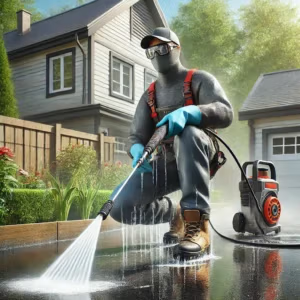
The most underestimated hazard in pressure washing is the water stream itself. A stream at 3,000 PSI can penetrate skin and cause injection injuries — forcing water, bacteria, and debris beneath the skin’s surface — that often require surgical treatment. These injuries don’t always look serious at first, which makes them more dangerous: the wound may appear minor while subcutaneous damage is extensive.
Anyone operating pressure washing equipment should wear safety glasses or goggles — not reading glasses or sunglasses. Debris becomes projectile at operating pressure, and eye injuries are among the most common pressure washing accidents. Closed-toe shoes are mandatory; flip-flops or sandals near operating equipment are genuinely dangerous. Work gloves protect hands from both the equipment and chemical exposure. When working with soft wash chemicals — sodium hypochlorite solutions — chemical-resistant gloves and eye protection are essential, as bleach at working concentrations causes skin and eye irritation quickly.
Hearing protection is worth considering for extended work sessions. Gas-powered pressure washers run at 85 to 95 decibels — in the range where cumulative hearing damage occurs with prolonged exposure.
Never Point the Wand at People, Pets, or Windows
This sounds obvious but warrants explicit attention. The wand should always be pointed at the intended surface — never at another person, at pets, or toward windows while at operating pressure. Children and pets should be inside and well clear of the work area. In Tallahassee’s residential neighborhoods, pets and children are common outdoors; establish a clear perimeter before starting any pressure washing work.
Windows are a specific hazard: glass at operating pressure and certain angles can crack or break, and screens will be damaged by direct contact with the stream. Work at low angles away from window panes, and if washing near large windows, reduce pressure and increase distance. Older single-pane windows — common in Midtown and historic Tallahassee properties — are particularly vulnerable and should be approached with 40-degree wide fan nozzles at maximum distance.
Nozzle Selection and Surface Safety
Nozzle selection is one of the most important safety and effectiveness decisions in pressure washing. Nozzles are color-coded by spray angle: red (0-degree) concentrates all pressure in a pinpoint stream capable of cutting into most materials and should almost never be used on residential surfaces. Yellow (15-degree) is used for tough concrete stains and hard surfaces but damages paint and soft materials at close range. Green (25-degree) is the general-purpose residential nozzle for concrete and hard surfaces. White (40-degree) is the appropriate nozzle for siding, wood, painted surfaces, and anything requiring gentler treatment. Black (65-degree) is a low-pressure chemical application tip used for applying soft wash solution, not for rinsing.
The zero-degree red nozzle causes more accidental surface damage than any other equipment issue. It has limited legitimate use in residential work and should be stored separately if using rental equipment — the risk of accidentally grabbing it when changing nozzles is real and the consequences immediate.
Work From a Stable Position — Especially at Height
The recoil from a pressure washer wand at high operating pressure is significant. On flat ground with both hands on the wand, this is easily managed. On a ladder, it’s a serious fall risk. The OSHA guidance for pressure washing at height recommends against working from ladders with operating equipment whenever possible — the sudden recoil of the wand can shift balance and cause falls from heights where injuries are severe.
For two-story work, extension wands that allow ground-level operation are the appropriate solution. Professional crews doing two-story house washes in Tallahassee neighborhoods like Killearn Estates, Waverly Hills, and Southwood use 4- to 6-foot extension wands that allow full roofline and upper gutter access from the ground. This eliminates fall risk entirely and is more controllable than ladder work. If ladder work is genuinely necessary for a specific area, use a proper platform ladder — never an extension ladder — with a spotter, and reduce operating pressure to the minimum effective level.
Chemical Handling Safety
Soft wash chemicals — primarily sodium hypochlorite — require basic handling precautions. Store concentrated bleach solutions in sealed containers away from direct sunlight, which degrades them quickly. Never mix bleach with ammonia-based cleaners, acids, or other chemicals — the reactions range from toxic fumes to violent reactions. When mixing dilutions, add chemical to water rather than water to chemical to avoid splashing. Work in ventilated areas when mixing, and avoid breathing vapor from concentrated solutions.
When applying soft wash solution to a roof or siding, wind direction matters. Applying into the wind carries overspray back toward the operator and any bystanders. Always work with the wind — apply solution moving downwind — and maintain awareness of where overspray is drifting relative to landscaping, vehicles, and people.
Electrical Hazards
Water and electricity require serious respect. Before starting any exterior pressure washing, cover all exterior electrical outlets, cover outdoor light fixtures that aren’t rated for wet environments, and identify the locations of any buried electrical lines or low-hanging utility lines. In Tallahassee’s established neighborhoods, overhead utility lines run at various heights — an extension wand or spray from a high-angle nozzle can contact overhead lines if you’re not tracking your position carefully.
Never pressure wash electrical panels, meter bases, or HVAC electrical components. When washing near air conditioning condensers — which most Tallahassee homes have in tight quarters along the foundation — use low pressure, wide fan angles, and don’t direct the stream into condenser fins at close range.
When to Stop and Call a Professional
Some jobs are straightforward DIY territory: washing a single-story driveway or patio with rental equipment is manageable with basic safety precautions. Other jobs significantly raise the risk profile: two-story house washing, roof treatment, work near overhead utilities, large properties with complex building envelopes, or any situation requiring chemical applications in tight proximity to water features or sensitive landscaping.
Professional crews bring not just equipment but experience reading hazards quickly and adjusting technique before something goes wrong. For Tallahassee homeowners in neighborhoods like Betton Hills, Midtown, or Woodville where mature trees, older construction, and complex lot layouts are common, the case for professional service on whole-house work is strong on safety grounds alone — independent of the equipment quality difference.
Professional Pressure Washing in Tallahassee
Around the Bend Pressure Washing handles residential and commercial exterior cleaning throughout Tallahassee and surrounding communities including Killearn Estates, Killearn Lakes, Bradfordville, Southwood, Betton Hills, Waverly Hills, Midtown, Woodville, Crawfordville, Quincy, and Midway. Our crews are trained in safe operation, surface-appropriate technique, and chemical handling protocols.
Call 850-888-2105 to schedule service or to ask questions about what a professional exterior cleaning involves for your specific property.
1 thought on “Pressure Washing Safety Tips: Protect Yourself and Your Property in Tallahassee”
Pingback: Industrial Equipment Cleaning: Ultimate Solutions for Effective Heavy-Duty Cleaning - Tallahassee Pressure Washing Services