
Graffiti Removal from Brick and Masonry in Tallahassee: What Works and What Doesn’t
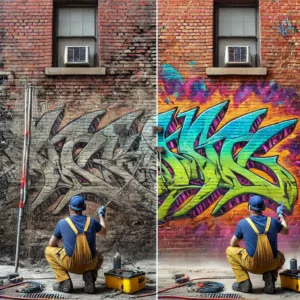
Graffiti on brick surfaces presents a different cleaning challenge than most exterior contamination. Unlike algae, mildew, or clay soil staining that sits in surface pores, spray paint bonds chemically to masonry surfaces and requires a combination of chemical penetrants and mechanical force to remove — with the added complication that too much force on brick mortar causes permanent damage that may be worse than the original graffiti. This guide covers the techniques, chemicals, and realistic expectations for graffiti removal from brick and masonry in the Tallahassee area.
Why Brick Graffiti Is Difficult to Remove
Modern spray paints use acrylic, alkyd, or lacquer-based formulations designed to adhere firmly to the surfaces they’re applied to. On porous masonry like brick and concrete block, the paint penetrates into surface pores rather than just coating the face — which is why a single pressure washing pass rarely removes graffiti completely and often just spreads diluted pigment into adjacent pores. The challenge multiplies with older brick where mortar has softened with age and is more susceptible to erosion from aggressive cleaning techniques.
The other complication: removing paint without damaging the brick face or mortar joints is technique-dependent. Aggressive high-pressure cleaning at close range removes paint but also erodes mortar and can etch or spall the brick face itself. The goal is maximum paint removal with minimum substrate damage — which requires the right chemical for the paint type, appropriate dwell time, and controlled pressure rather than maximum PSI.
The Two-Stage Approach: Chemical + Mechanical
Effective graffiti removal from brick uses chemistry first, mechanical pressure second. The chemical stage penetrates and softens the paint bond; the pressure washing stage removes the softened paint without requiring the extreme force that would be needed to mechanically abrade it off without chemical assistance.
Graffiti Removal Chemicals
Several chemical categories are used for masonry graffiti removal, and the right choice depends on the paint type, how long the graffiti has been on the surface, and the porosity of the masonry:
- Solvent-based removers (methylene chloride, NMP, d-limonene, or acetone-based) — Most effective on fresh paint. These penetrants dissolve or soften the paint binder, allowing it to be pressure washed off with much lower PSI than unpreated paint requires. Products like Dumond Peel Away, Graffiti Gone, or similar commercial masonry graffiti removers fall in this category. Apply generously, cover with plastic sheeting to prevent evaporation during dwell time (typically 15–60 minutes depending on paint thickness), then pressure wash.
- Poultice removers — Paste or gel formulations that are applied, stay in contact with the surface for extended periods (hours to overnight), and draw the paint pigments and binder out of the masonry pores by absorption. More appropriate for deeply penetrated, older paint on very porous brick where solvent spray-and-rinse leaves residual staining.
- Anti-graffiti coatings — Applied after removal rather than for removal itself. Sacrificial coatings create a barrier that prevents future paint from bonding to the masonry and allows easier removal of subsequent graffiti with pressure washing alone.
Pressure Washing the Treated Surface
After chemical dwell time, pressure washing at 1,500–2,500 PSI with a 25° green tip or turbo nozzle removes the softened paint. The critical technique: maintain adequate standoff distance (8–12 inches minimum from the brick face) and use consistent, overlapping passes with the grain of the masonry rather than random direction changes that push paint into adjacent sections. A turbo nozzle — the spinning zero-degree tip — concentrates cleaning power and is effective on heavily painted surfaces while the turbo motion distributes force more evenly than a static zero-degree tip.
Mortar joints require special attention during graffiti removal pressure washing. Older mortar in Tallahassee brick buildings — common in pre-1980s construction in Midtown, Waverly Hills, and older commercial corridors — erodes more readily under sustained pressure than the brick faces themselves. Operators should reduce PSI or increase standoff distance when working near mortar joints, particularly if the mortar shows any sign of existing erosion or weathering.
Fresh vs. Weathered Paint: Timing Matters
The most important variable in graffiti removal success is how long the paint has been on the surface. Fresh paint — within 24–72 hours of application — has fully bonded at the surface but hasn’t significantly penetrated deep into masonry pores. Chemical removers work faster and more completely on fresh paint, and pressure washing after treatment achieves higher percentage removal in a single application.
Paint that has been on masonry for weeks or months has had time to weather, partially polymerize, and penetrate more deeply into the substrate. In Tallahassee’s climate — with frequent rain, UV exposure, and temperature cycling — outdoor paint ages and hardens faster than in milder climates. Older graffiti may require multiple treatment cycles (apply chemical, dwell, pressure wash, allow to dry, reapply) to achieve satisfactory removal. Full removal of very old paint is sometimes not achievable without surface damage, and a skilled contractor sets honest expectations about achievable results before work begins.
Realistic Expectations for Graffiti Removal
Complete, undetectable removal of graffiti from brick is achievable on smooth-faced brick with fresh paint using the right chemical and technique. On rough-textured or heavily porous brick with older paint, some level of “ghosting” — faint residual staining in the deepest surface pores — is common even after professional treatment. This ghosting can fade further over time as the brick weathers and the residual is gradually diluted by rainfall, but it may not fully disappear without more aggressive abrasive treatment that carries its own surface damage risk.
The alternative when full removal isn’t achievable without damage: color-matching masonry paint to cover the affected area. While not technically “removal,” this approach restores appearance when chemical removal has reached its practical limit. For commercial properties and historically significant buildings in Tallahassee, paint-over is sometimes the preservation-appropriate choice when the building materials are fragile or historically significant.
Anti-Graffiti Coatings: Prevention After Removal
For surfaces in higher-risk locations — commercial properties in Tallahassee’s urban core, retaining walls along roads, and any surface that has been targeted before — an anti-graffiti coating after cleaning provides meaningful protection against future incidents. Sacrificial wax-based coatings allow pressure washing alone to remove new graffiti without chemical treatment, since the paint bonds to the coating rather than the masonry. Permanent anti-graffiti coatings (polyurethane-based) are more durable but more expensive and require solvent-based removal themselves when the coating eventually needs replacement.
Professional Graffiti Removal in Tallahassee
Around the Bend Pressure Washing handles graffiti removal from brick, concrete, concrete block, and painted masonry surfaces throughout Tallahassee and surrounding areas including Bradfordville, Killearn Estates, Killearn Lakes, Southwood, Midtown, Waverly Hills, Ox Bottom, Crawfordville, Woodville, Quincy, and Midway. We assess paint type, substrate condition, and graffiti age before recommending a treatment approach, and we provide honest assessments of what’s achievable for each situation.
Call 850-888-2105 to schedule graffiti assessment and removal or to ask about anti-graffiti coating options for higher-risk surfaces. The sooner treatment begins after the graffiti is applied, the better the removal results — don’t wait.
1 thought on “Graffiti Removal from Brick and Masonry in Tallahassee: What Works and What Doesn’t”
Pingback: Emergency Pressure Washing Services: Quick Solutions for Urgent Situations - Tallahassee Pressure Washing Services