If you’re searching for pool cage cleaning service near Tallahassee, you’ve probably noticed that it can be hard to separate contractors who genuinely understand screen enclosure cleaning from those who treat it like any other pressure washing job. The distinction matters because pool cages require a different approach than driveways or siding — the materials are more vulnerable, the cleaning method needs to be soft and chemical-based rather than high pressure, and a contractor who doesn’t know this can damage your enclosure while cleaning it.
Here’s what separates a good pool cage cleaning service from one that just shows up with a pressure washer, and what you can expect from professional enclosure cleaning in the Tallahassee area.
Why Pool Cages Need Specialized Cleaning Technique
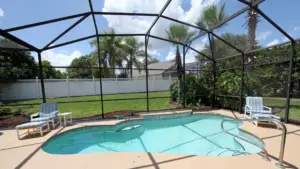
Pool cage enclosures are built from aluminum framing and fiberglass screen panels. Both materials have real vulnerabilities to high-pressure water. Aluminum frame members — particularly the thinner horizontal rails and vertical members in standard residential enclosures — can bend or deform under direct high-pressure impact. The connections between frame members and the screen spline channels can be damaged. Screen panels made of fiberglass mesh will tear under high-pressure water directed at close range; even without outright tearing, the fiberglass weave gets pushed out of alignment, creating slack panels that are more prone to future tearing under wind stress.
The correct technique is soft washing: applying a biocidal cleaning solution at 40–80 PSI (below any damage threshold) and allowing the chemistry to kill and release the algae, mold, mildew, and oxidation that discolor the surface. The solution is rinsed at low pressure after a dwell period of 10–15 minutes. This cleans effectively without stressing the aluminum frame or screen panels.
Any pool cage cleaning contractor who is not specifically soft washing your enclosure is using the wrong method. A 1,500+ PSI pressure wand directed at a screen panel is not pool cage cleaning — it’s pool cage damage in progress.
What Good Pool Cage Cleaning Looks Like
A professional pool cage cleaning visit typically follows this sequence: the technician pre-wets any plants or landscaping adjacent to the cage base, covers or protects the pool surface if chemical volumes are significant, then applies the cleaning solution to the cage frames and screen panels systematically — typically from the top down. The solution dwells for 10–15 minutes while the biocide kills biological growth. A low-pressure rinse then removes dead organic matter, solution residual, and any loose debris from frames and screen surfaces.
A thorough job also includes cleaning the pool deck surface beneath and around the cage, which accumulates the same biological growth and benefits from the same treatment. Frames are inspected for loose connections, pulled splines, visible corrosion, or screen panels that need re-screening — items that should be flagged to the homeowner even if they’re outside the scope of a cleaning service.
After cleaning, the frames should look noticeably cleaner — restored from oxidized gray or green-stained to their original white or bronze tone — and the screen panels should be clear enough that visibility through them has improved. If there are sections where the screen itself appears dark or discolored even after cleaning, those panels may need re-screening; discoloration that doesn’t clean off indicates either physical damage to the screen fibers or biological penetration that’s past the point of surface cleaning.
How Often Do Pool Cages Need Cleaning in Tallahassee?
In Tallahassee’s climate, once per year is the practical minimum for most pool cages. Twice per year — typically spring (after pollen season) and fall (after leaf season) — is better for homes under significant tree canopy.
Homes in wooded neighborhoods like Killearn Lakes, Waverly Hills, Ox Bottom Road area, and parts of Bradfordville accumulate organic debris — oak leaves, pine needles, pollen — much faster than homes on open lots. The debris compacts into screen mesh, holds moisture, and creates the nutrient layer that accelerates algae and mildew growth. These homes often benefit most from twice-yearly service.
Homes in sunnier, less canopied areas of Crawfordville, Midway, and newer Southwood developments can typically maintain appearance on annual service. The key indicator is whether the screen panels and frames are visibly discolored or showing green haze — when that’s present, it’s time regardless of when the last cleaning was.
Pool Cage Cleaning vs. Re-Screening: Knowing the Difference
Cleaning restores appearance and kills biological growth. Re-screening replaces physically damaged or deteriorated screen panels. These are separate needs, and it’s important to understand which one applies to your situation.
Screen panels that look dark or stained but are structurally intact need cleaning. Screen panels with visible holes, tears, sagging, or mesh that has pulled away from the spline channel need re-screening. Fiberglass screen panels typically last 7–15 years depending on exposure to UV, wind, and physical impact before they need replacement — cleaning extends the visual life of the panel but can’t restore structural integrity once the fiberglass fibers have broken down.
Pool cage cleaning contractors and screen re-screening contractors often overlap, but not always. When looking for service, it’s worth asking whether the contractor can also provide a re-screening quote if any panels need replacement — this saves a second visit and lets you get both done at the same time if needed.
Pool Cage Cleaning Service Near Tallahassee
Around The Bend Pressure Washing provides pool cage and screen enclosure cleaning throughout the Tallahassee area. We serve homeowners in Killearn Estates, Killearn Lakes, Betton Hills, Bradfordville, Southwood, Midtown Tallahassee, Crawfordville, Midway, Quincy, Woodville, and Wakulla County. All pool cage work is done with soft wash technique — no high-pressure methods that risk screen or frame damage.
We assess enclosure condition during cleaning and flag any panels or structural issues we notice. If you’re not sure whether your cage needs cleaning, re-screening, or both, call us at 850-888-2105 and we’ll give you a straightforward assessment.
1 thought on “Pool Cage Cleaning Near Me: What to Look for in a Tallahassee Screen Enclosure Service”
Pingback: The Ultimate Guide to Pool Cage Cleaning in Tallahassee - Tallahassee Pressure Washing Services
Comments are closed.