Florida homeowners deal with exterior cleaning demands that are more aggressive than most of the country, and generic advice — “wash your house every 1–2 years” — doesn’t fully account for what actually happens to homes in this climate. Tallahassee and the surrounding North Florida region have specific conditions that affect how quickly exterior surfaces deteriorate without maintenance and how often professional cleaning realistically needs to happen.
The Florida Climate Difference
The factors that drive exterior surface contamination in Florida are humidity, rainfall, heat, and tree canopy. Tallahassee averages over 60 inches of annual rainfall — more than Seattle. Relative humidity regularly exceeds 70% from April through October, creating near-constant moisture on shaded exterior surfaces. Summer temperatures above 90°F accelerate biological growth. And Tallahassee has one of the densest urban tree canopies in the country, which keeps surfaces shaded and damp long after rain events and deposits organic material year-round.
The result: algae, mold, mildew, and lichen colonize exterior surfaces significantly faster here than in drier or cooler climates. A home in a dry western state might go 3–5 years between necessary exterior washings. A comparable home in Tallahassee’s wooded neighborhoods — Killearn Estates, Waverly Hills, Betton Hills — may show visible biological growth on siding within 12 months of the last cleaning.
General Recommendation: Annual for Most Florida Homes
For most Tallahassee-area homes, annual exterior house washing is the practical maintenance standard. This keeps biological growth from establishing beyond the surface layer, maintains curb appeal, and prevents the accelerated paint and siding degradation that comes from allowing mold and algae to persist for multiple years.
Annual cleaning is also more cost-effective than allowing contamination to accumulate over 2–3 years and then paying for a more intensive cleaning job. A lightly contaminated house washed annually is faster and less expensive per visit than a heavily contaminated house cleaned every other year that requires stronger chemical treatments and more time on site.
When to Clean More Frequently
Several conditions push toward more frequent cleaning than annual:
Heavy tree canopy is the biggest factor. Homes under significant oak, pine, or hardwood canopy — common in Killearn Lakes, the Ox Bottom area, Miccosukee Road corridor, and many Bradfordville neighborhoods — have shaded surfaces that stay damp longer and receive continuous organic debris deposits. These homes often benefit from exterior cleaning every 6–9 months rather than annually.
North-facing walls develop biological growth faster than south-facing walls on the same house because they receive less direct sun, which is the natural suppressant of algae growth. If the north-facing side of your house is visibly greener than the south-facing side, the house as a whole likely needs more frequent cleaning than the south-facing appearance would suggest.
Homes with recent exterior painting benefit from annual cleaning to protect the paint investment. Mold and mildew under fresh paint causes premature peeling and shortens the paint cycle significantly. Keeping the painted exterior clean extends the time before repainting is necessary.
Pool cage and screen enclosure owners often schedule house washing and cage cleaning together — the same moisture and biological growth dynamics apply to both, and doing them in one service visit is more efficient.
What to Clean and How Often: Surface-by-Surface
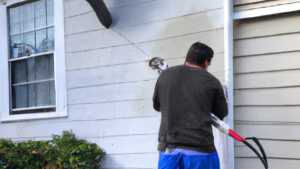
House siding (vinyl, stucco, painted wood, fiber cement): annually is standard for Tallahassee homes; every 6–9 months for heavily shaded properties. Soft washing is the appropriate method for biological contamination.
Roof (asphalt shingles or tile): every 2–3 years for typical homes, every 1–2 years for heavily shaded roofs. Soft washing only — pressure washing damages shingles. A roof that’s never been cleaned and shows dark streaking should be addressed promptly because the biological growth is actively degrading the roofing material.
Driveway and walkways: annually, or when biological growth and staining become visible. Concrete driveways in shaded areas develop algae quickly in Tallahassee’s climate.
Gutters: twice per year — spring after pollen season and fall after leaf drop. Tallahassee’s 60+ inch annual rainfall makes clogged gutters a foundation risk, not just a cosmetic issue.
Pool cage: annually minimum; twice yearly for heavily wooded settings.
The Visual Indicator Method
Rather than a strict calendar schedule, monitoring your home’s exterior visually and cleaning when growth appears is a practical approach. The indicator to act on: when you see a green or gray-green haze developing on north-facing walls, when the soffits show dark spotting, or when the driveway has visible biological discoloration, those are signals that cleaning is overdue rather than upcoming. In Tallahassee’s climate, waiting for growth to become obvious means it’s already been established for months and degrading the surface underneath.
Exterior Cleaning Services in Tallahassee
Around The Bend Pressure Washing provides house washing, roof soft washing, driveway cleaning, pool cage cleaning, and gutter cleaning throughout Tallahassee and surrounding areas — serving Leon, Gadsden, Wakulla, and Jefferson counties. Call us at 850-888-2105 to schedule service or set up a regular maintenance schedule for your property.