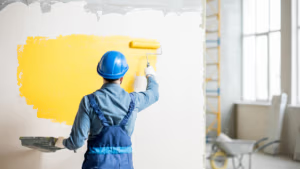
Every professional painter and every quality paint manufacturer will tell you the same thing: surface preparation is the most important factor in how long an exterior paint job lasts. And in Florida’s climate — where mold, mildew, chalking paint, and biological contamination are year-round realities — pressure washing before painting isn’t just a recommendation. It’s the difference between a paint job that lasts 8–10 years and one that starts peeling in 2–3.
Why Paint Fails Early on Florida Homes
Understanding why exterior paint fails helps explain why pre-painting cleaning matters so much. The primary failure modes on Florida homes:
Mold and mildew under the paint film. This is the most common cause of premature paint failure in humid climates. When paint is applied over a surface that has biological contamination — even contamination that isn’t visible to the naked eye — the organisms continue metabolizing beneath the paint film. They break down the film’s adhesive bond to the substrate from the underside, causing bubbling, blistering, and peeling that appears within months of application. The paint looks freshly applied on the surface while the substrate beneath is being actively degraded.
Chalking paint is another common issue. Chalking is the natural degradation of paint binders from UV exposure — the surface layer breaks down into a powdery residue. Painting over chalk without removing it first creates a “weak interface” — the new paint bonds to the chalk layer rather than the underlying paint or substrate, and the chalk layer fails under the new paint coat, taking everything above it with it.
Dirt, grime, and surface contamination prevent proper adhesion. Paint applied to a contaminated surface bonds to the contamination rather than the substrate. Any adhesion to the substrate is compromised, and the paint will fail at the contamination layer rather than providing the expected lifespan.
What Pressure Washing Accomplishes Before Painting
A proper pre-painting wash removes all of these failure-causing conditions. For a Tallahassee home being prepared for exterior repainting, the cleaning sequence typically involves soft washing (to kill biological contamination with biocidal chemistry, not just remove it visually), followed by a pressure wash rinse that removes the dead biological matter, chalking paint residue, loose material, and surface contamination.
The killing step is critical and often skipped by less thorough prep work. Simply pressure washing mold and mildew off a surface removes the visible growth but leaves viable spores on the surface that germinate through the new paint film within months. Soft washing with sodium hypochlorite solution kills the organisms before the surface is rinsed and dried. This is why painting contractors who do thorough prep work include a bleach wash (soft wash) as part of their preparation sequence, not just a rinse.
After soft washing, the surface needs adequate dry time before painting begins. In Tallahassee’s humid climate, this typically means 24–72 hours of dry weather between the pressure wash and paint application, depending on the surface material and ambient humidity. Painting over a surface that hasn’t fully dried traps moisture under the new film — one of the direct causes of early blistering and adhesion failure.
Wood and Stucco: Special Considerations
For wood siding preparation, the cleaning pressure must be controlled carefully. High pressure raises the wood grain, creating a rough surface texture that absorbs more paint and dries unevenly. It also drives moisture deeper into the wood fiber, extending the required dry time before painting can begin. For wood preparation washing, 500–800 PSI maximum with a 40-degree nozzle, working with the grain rather than across it, is the professional standard.
Stucco preparation requires assessing crack condition before washing. High-pressure water forced into existing hairline cracks in stucco can widen them and introduce moisture into the wall assembly. Any cracks should be filled and cured before the pre-paint wash — not after. The wash sequence is: inspect and repair, then wash, then dry, then prime, then paint.
Coordination With Your Painting Contractor
Many painting contractors in Tallahassee include surface preparation (washing) in their service or coordinate it as part of the project timeline. Whether the pressure washing is done by the painter or a separate exterior cleaning contractor, the key timing requirement is sufficient dry time between wash and paint application. Schedule washing at least 2–3 days before painting begins in summer, and 3–5 days in fall when temperatures are lower and humidity lingers longer.
Pre-Paint Pressure Washing in Tallahassee
Around The Bend Pressure Washing provides pre-painting surface preparation washing throughout Tallahassee and the surrounding area. We include a soft wash step to kill biological contamination before rinsing — the preparation that makes paint last rather than just making the surface look clean temporarily. Serving Leon, Gadsden, Wakulla, and Jefferson counties. Call us at 850-888-2105 to schedule pre-paint washing.